




Table of Content
AI is moving beyond digital interfaces and into the environments where products are used, assets operate, and work gets done. For many organizations, the next opportunity is to connect AI with sensors, devices, machines, and automation systems so intelligence can influence real-world outcomes.
Physical AI starts from capabilities many companies already have in place: connected devices, operational data, embedded systems, cloud platforms, and IoT infrastructure. The difference is that these systems are no longer limited to monitoring conditions or reporting data. They can interpret signals, support decisions, and trigger actions across equipment, products, facilities, vehicles, and field operations.
This shift matters because business performance is often shaped by physical constraints: downtime, maintenance delays, safety risks, energy usage, manual inspections, and operational bottlenecks. Physical AI creates a path to reduce those constraints by helping systems interpret conditions and respond with greater precision.
What Is Physical AI?
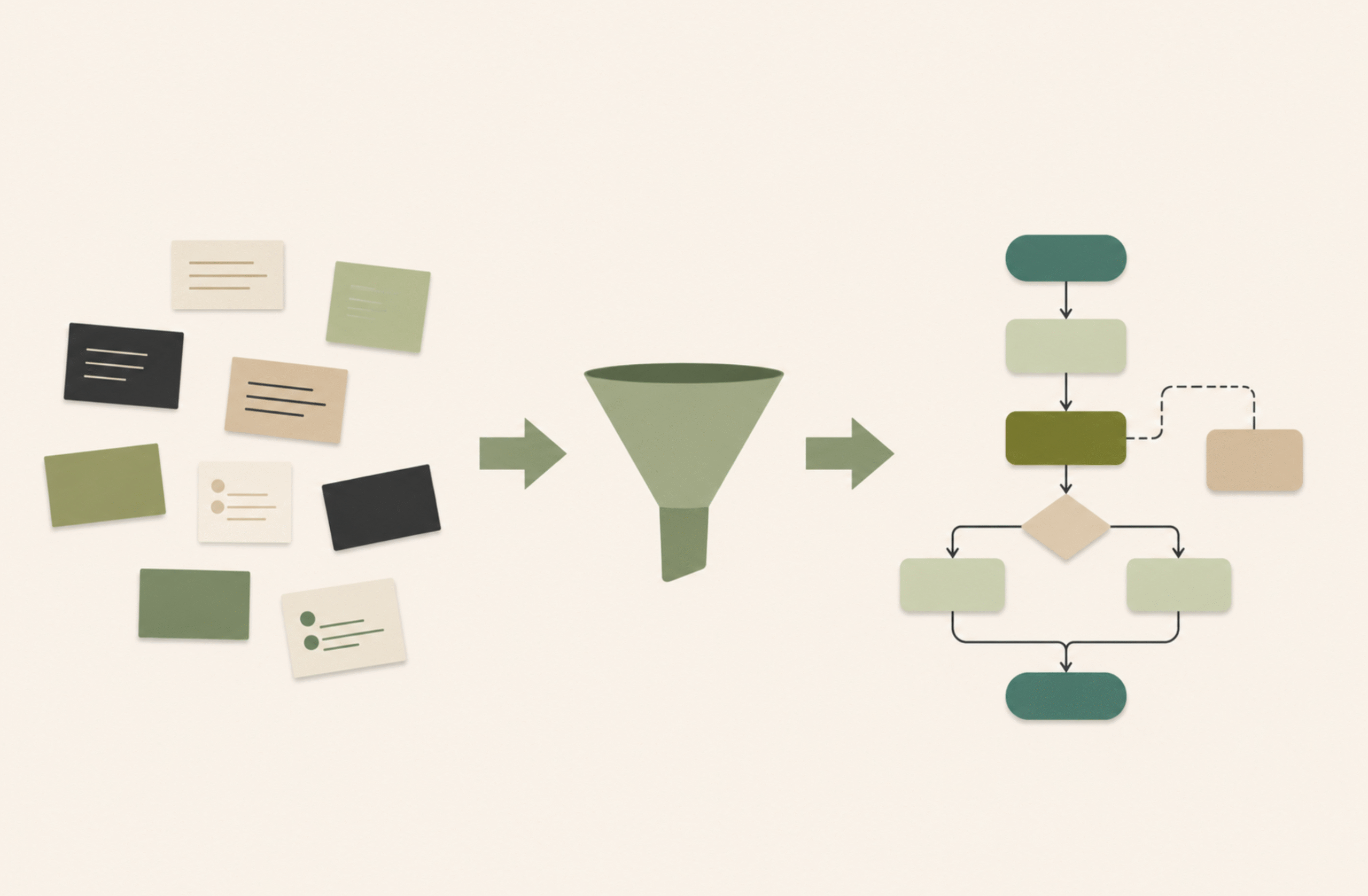
Physical AI refers to systems that combine connected devices, sensors, AI models, embedded software, and automation controls to interact intelligently with the physical world. These systems follow a practical loop: they sense conditions, interpret what is happening, determine an appropriate response through AI, business logic, or human oversight, and trigger or recommend an action. This is where Physical AI extends beyond traditional IoT. IoT connects devices and collects data from equipment, products, environments, or people. The next layer adds interpretation, decision-making, and action. Instead of only reporting that a machine is overheating, a system may adjust operation, alert a technician, reduce load, or trigger a maintenance workflow.
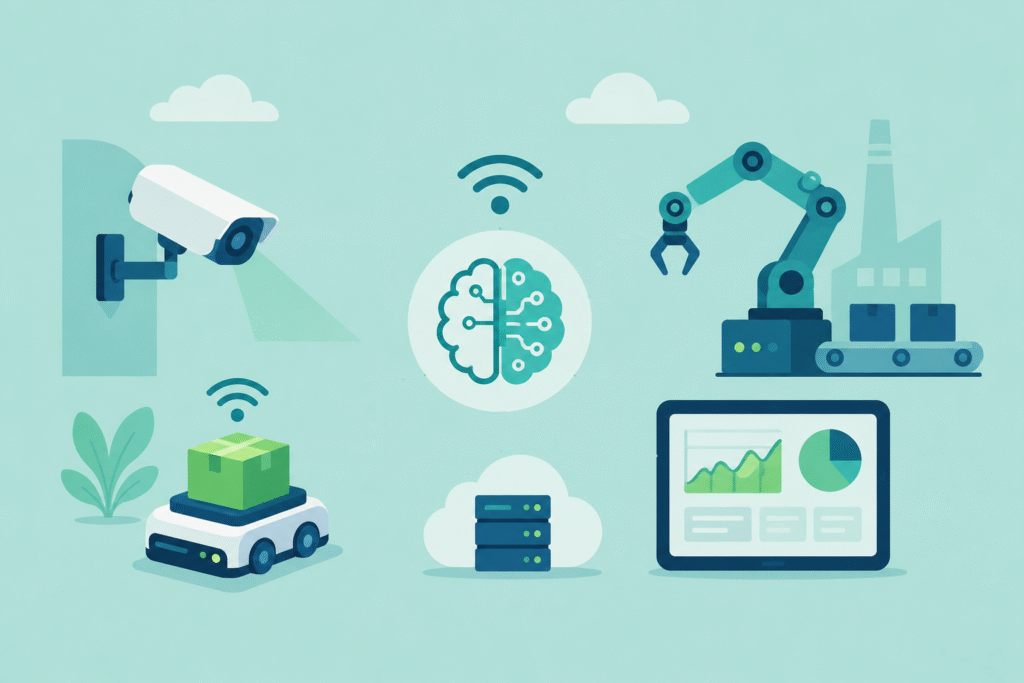
The distinction is easiest to see in concrete terms. A camera that streams video is a connected device; a camera combined with a computer vision system that detects unsafe movement and initiates a safety response is part of a Physical AI system. A machine sensor that reports vibration is an IoT data source; a system that analyzes sensor data to identify anomalies and trigger preventive action is part of a Physical AI workflow.
The same pattern can apply across smart products, industrial equipment, buildings, vehicles, robots, wearables, and field devices. Physical AI turns connected systems into responsive systems that can support decisions and influence real-world outcomes.
Why Physical AI Is Emerging Now
Physical AI is becoming more practical because several technologies are maturing at the same time. Connected sensors are already embedded in products, equipment, buildings, and field environments. Edge computing makes it possible to process information closer to the device, reducing delays when decisions need to happen quickly. Computer vision helps systems interpret images, movement, and objects, while cloud platforms provide the data, integration, and model management needed to improve systems over time.
At the intelligence layer, newer AI approaches are making it easier to connect perception, language understanding, and downstream control systems that enable physical action. Training methods and simulation environments also allow teams to test behavior before deployment. Digital twins extend this further by making it possible to evaluate physical behavior safely before systems go live.
These advances matter because Physical AI requires more than collecting data — it depends on interpreting conditions and supporting action reliably.
Business Opportunity Areas
The opportunity in Physical AI is strongest where physical conditions affect cost, quality, safety, speed, asset performance, or customer experience. Many organizations already have the core building blocks in place: connected products, operational data, sensors, mobile apps, cloud platforms, and automation systems. Those investments become more valuable when systems can interpret conditions and respond in real time.
Key opportunity areas include:
- Connected products: Manufacturers can make devices more intelligent after deployment. Industrial equipment, consumer products, medical devices, energy systems, and infrastructure hardware can detect usage patterns, identify abnormal behavior, support predictive maintenance, or adjust performance based on the environment. This creates opportunities for better product experiences, differentiated services, and stronger customer relationships.
- Manufacturing and logistics automation: Physical AI can support inspection, routing, material movement, asset tracking, and equipment optimization. Robots, autonomous mobile systems, vision-enabled inspection tools, and connected machinery can help operations reduce delays, improve visibility, and respond faster when conditions change.
- Predictive maintenance: Sensors embedded in machines can capture vibration, temperature, current, pressure, or other operating signals. AI models can interpret those signals to detect anomalies, prioritize maintenance, and help reduce the risk of unexpected failure.
- Safety and compliance: Physical AI can help monitor restricted zones, detect potentially unsafe behavior or hazardous situations, identify environmental risks, support PPE checks, or trigger alerts when conditions move outside acceptable thresholds. This is especially relevant in industrial sites, utilities, transportation, healthcare, and other environments where safety depends on real-time awareness.
- Field service and operations: AI-enabled devices, drones, mobile tools, or connected assets can help technicians inspect, diagnose, and act with better context. This can improve consistency in inspections, reduce manual reporting, and help teams make better decisions in the field.
- Smart buildings and environments: Facilities, campuses, retail spaces, and industrial sites can use Physical AI to adjust HVAC, lighting, access, energy usage, occupancy flows, and maintenance activity based on real-world conditions.
Across these examples, the common thread is that data no longer stops at visibility. It becomes part of how equipment, products, facilities, and teams respond.
The System Architecture Behind Physical AI
Physical AI depends on more than an AI model. It requires a connected system that can capture signals from operating environments, interpret what is happening, and trigger action safely. For business leaders, the important point is that this is not a standalone application. It brings together IoT, embedded software, cloud services, AI models, automation controls, and operational workflows.
A practical architecture includes several layers:
- Sensing layer: Devices, sensors, cameras, machines, wearables, and equipment telemetry capture conditions from the physical environment.
- Connectivity layer: IoT networks, gateways, cloud platforms, and operational systems move data between devices, applications, and business processes.
- Intelligence layer: AI models, analytics, computer vision, and business rules interpret signals, detect patterns, identify exceptions, and recommend or determine appropriate next steps, which may be executed automatically or reviewed by a human.
- Action layer: Alerts, workflows, device controls, actuators, robots, mobile apps, or human instructions turn intelligence into real-world response.
- Management layer: Monitoring, cybersecurity, software updates, data governance, safety controls, and human oversight help keep the system reliable as it operates.
These layers matter because intelligence creates value only when it reaches the environment where action takes place. A model may detect an issue, but the business outcome depends on whether the system can communicate, respond, escalate, or adjust in a controlled and reliable way.
How to Get Started
Physical AI initiatives should begin with a focused business problem, not with a technology purchase. Strong candidates are operational areas where delays, manual monitoring, safety risks, equipment downtime, or inconsistent decisions create measurable impact. A stronger case emerges when success can be tied to outcomes such as improved uptime, faster response, higher throughput, or lower operating costs.
Execution readiness matters as well. A promising use case depends on reliable data, connected devices or control points, and operating processes that can support a more intelligent response. When those conditions are in place, Physical AI becomes a practical investment rather than an interesting concept. The path can follow several steps:
- Identify a bounded use case: Start with one product, asset class, facility, workflow, or operational problem. Useful entry points include equipment monitoring, inspection, field service support, safety alerts, warehouse movement, energy optimization, or connected product intelligence.
- Assess the existing foundation: Review what devices, sensors, systems, data sources, cloud platforms, and mobile tools are already in place. Many companies do not need to start from zero; they need to understand what their current connected infrastructure can support.
- Build a cross-functional team: Bring together business, operations, product, IoT, embedded software, cloud, security, and AI skills. Include the people who will use or manage the system in the field.
- Define the desired action: Clarify what the system should do after it detects a condition. The action may be an alert, a workflow trigger, a device adjustment, a maintenance recommendation, a safety response, or a human review step.
- Prototype in a controlled environment: Use a lab setting, limited deployment, simulation, or digital twin to test how the system interprets signals and responds before expanding into live operations.
- Decide what runs at the edge and what runs in the cloud: Some inference and control functions need to execute close to the device because of latency, safety, reliability, or connectivity requirements. Other functions, such as analytics, reporting, model improvement, and fleet coordination, may be better handled through cloud systems.
- Build safety and oversight from the beginning: Physical AI affects real environments, so teams should plan for monitoring, cybersecurity, manual override, escalation paths, and clear human responsibility.
- Scale after proving value: Once a pilot shows reliable performance, the organization can expand to more devices, sites, workflows, or product lines.
This approach allows companies to learn from one practical use case, prove value, reduce risk, and build the capabilities needed for broader adoption.
Building Physical AI Responsibly
Physical AI raises the stakes of AI adoption because decisions can affect equipment, facilities, workers, customers, and real-world operations. That makes responsible design essential from the beginning.
Organizations should treat Physical AI as a system that must be tested, monitored, secured, and controlled across its full lifecycle. Safety controls, cybersecurity, human oversight, escalation paths, and manual override should be built into the architecture, not added after deployment. For autonomous machines or connected equipment, this may include emergency stops, operating limits, access controls, secure connectivity, and clear procedures for exceptions.
Reliability is especially important. A model may perform well in simulation or controlled testing, but physical environments introduce distribution shifts variability that is difficult to model completely. Differences in lighting, surfaces, movement, connectivity, sensor quality, and human behavior can all affect performance after deployment. This is why pilots, staged rollouts, and continuous monitoring matter.
Responsible design also requires clarity about data use, especially when systems capture video, location, equipment behavior, or workplace activity. The goal is not only to reduce risk, but to build trust with operators, customers, regulators, and business leaders as intelligent systems become part of physical operations.
From Connected Devices to Intelligent Action
Physical AI represents a natural next step for organizations already investing in IoT, connected products, automation, and AI. The opportunity is not limited to robots or advanced industrial systems. It begins wherever real-world data can help a product, asset, facility, or team respond with greater intelligence.
The strategic question is where physical operations can become more adaptive. A connected device can become a smarter product. A monitored asset can become a predictive maintenance opportunity. A facility system can become more responsive to occupancy, energy use, or safety conditions. A field workflow can become more informed by real-time context.
Moving in this direction requires more than experimentation with AI models. It requires the ability to connect devices, data, embedded software, cloud platforms, AI models, mobile apps, and operational workflows into reliable systems.
For Krasamo, Physical AI is a natural extension of work across IoT development, AI development, embedded systems, edge computing, cloud integration, and connected product engineering. As companies look for practical ways to bring intelligence into the physical world, the opportunity is to move from connected infrastructure to reliable systems that can sense, interpret, and respond in physical operations.