




Table of Content
- Why Specifications Improve Delivery
- Why Prompting Alone Breaks Down
- From Prompting to Structured Execution
- When to Use Spec-Driven Development
- How Spec-Driven Development Works
- Project Constitution: Project-Level Guidance
- Using AI Agents Under Engineering Control
- Feature Specifications: The Unit of Progress
- The Changing Craft of Software Development
AI coding agents can generate software faster than traditional development workflows were designed to handle. That speed can be useful, but it also compresses the time available to notice ambiguity. If intent, constraints, or acceptance criteria are unclear, an agent can turn a small misunderstanding into a large volume of code before the team has reviewed the idea.
This is why specifications matter. A software specification captures what the software must do, which constraints matter, which decisions should guide the work, and how the result will be verified. In traditional development, specifications help teams align around requirements, user experience, architecture, interfaces, data models, testing expectations, and acceptance criteria.
In AI-assisted development, specifications become even more important. They are no longer only documentation for people to read. They become structured contexts that help AI agents plan, generate, modify, and validate code under human supervision.
That shift is the foundation of spec-driven development: moving from broad prompts and informal instructions toward a disciplined workflow where specifications guide execution.
Why Specifications Improve Delivery
Specifications make software work visible and reviewable before major implementation begins. By documenting decisions early, teams can catch misunderstandings while they are still text, diagrams, models, or interface contracts, instead of discovering them later in code or production workflows.
They also expose hidden assumptions, support more realistic estimates, and reduce rework by giving developers agreed expectations to build against.
Without this shared reference, teams rely more on interpretation. Over time, that can lead to scope drift, inconsistent implementation decisions, budget pressure, and missed expectations. In AI-assisted development, the risk grows faster because vague instructions can quickly produce misaligned code. The later ambiguity is discovered, the more expensive it is to correct.
Why Prompting Alone Breaks Down
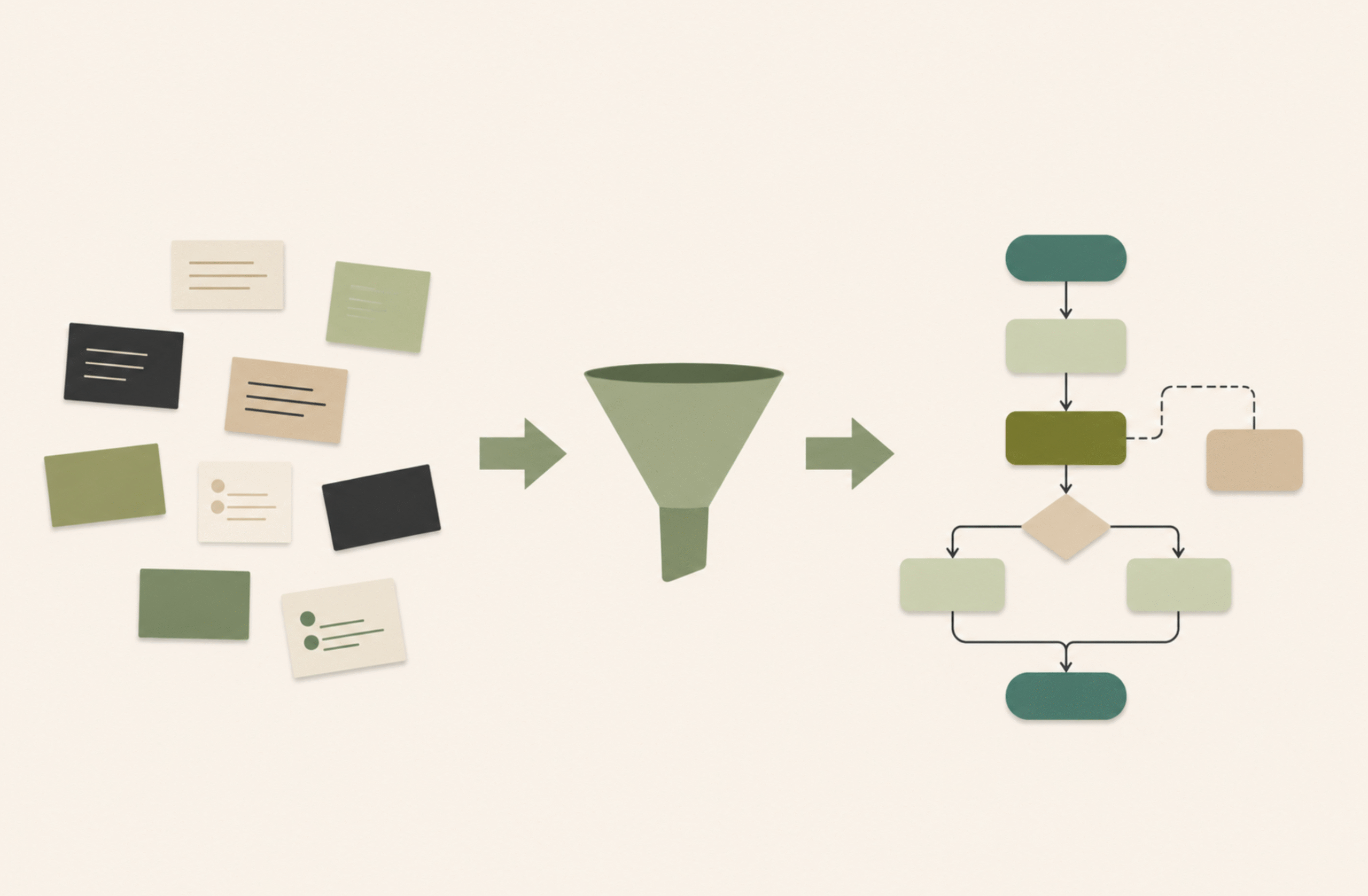
Short prompts can work for small, isolated tasks. But as scope grows, context drops between sessions, decisions remain implicit, and different developers or agents may implement the same idea in different ways. What begins as speed can turn into inconsistent behavior, rework, and technical debt.
Speed alone is not enough. As software grows, teams need specifications that preserve intent, context, and consistency across sessions, contributors, and tools.
From Prompting to Structured Execution
In AI-assisted delivery, specifications become active inputs to tools and agents, but they still require human review, verification, and acceptance. The practical goal is reduced ambiguity and stronger traceability, not zero interpretation.
Traditional specification documents help align teams, but they still depend on people to interpret the document and translate it into implementation decisions.
In AI-assisted development, that handoff changes. Specifications are no longer only reference documents for human teams. They can also provide structured context for AI coding agents, helping them generate, modify, and validate software in closer alignment with the project’s goals, constraints, and architecture.
This is the main difference between traditional specifications and spec-driven development. In traditional delivery, specifications often guide implementation, but the code eventually becomes the practical source of truth. In spec-driven development, the specification carries more authority: code is generated, reviewed, or validated against the spec, so the team can detect when implementation drifts away from the intended behavior.
In other words, traditional development (code-first approach) often treats documentation as something that supports the code, while spec-driven development treats specifications as something the code must follow.
When to Use Spec-Driven Development
Spec-driven development is most useful when ambiguity is expensive. It is especially valuable when teams are using AI coding agents, building complex features, working across multiple contributors, maintaining a long-lived system, or coordinating integrations where API contracts, data models, and validation rules must stay consistent.
SDD is also useful when the project needs continuity across sessions, branches, teams, or tools. Because AI coding agents accelerate implementation, unclear direction can quickly become rework, inconsistent implementation, or technical debt. A specification-driven workflow gives the team a stable reference before implementation and a validation point after the code is produced.
SDD does not need the same level of rigor for every task. For a quick prototype, exploratory experiment, isolated change, or simple feature with obvious requirements, a lightweight prompt or short spec may be enough. The more important, long-lived, integrated, regulated, or AI-assisted the work is, the more valuable a structured specification becomes.
How Spec-Driven Development Works
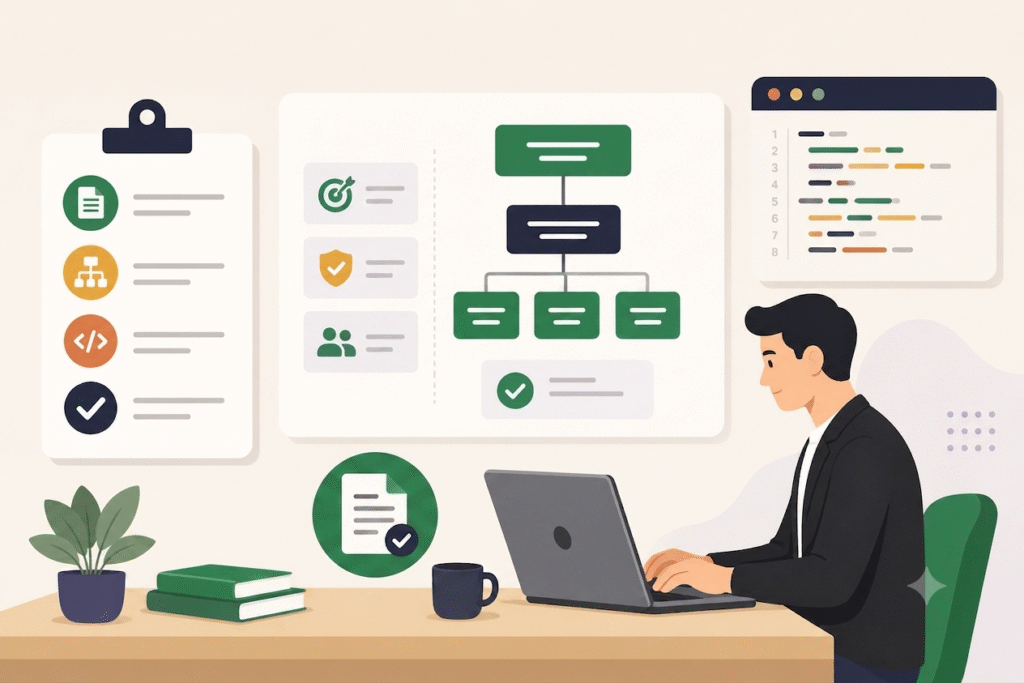
In practice, spec-driven development works through layers of specification. Project-level guidance defines the principles, constraints, and architectural guardrails that should shape the work. Feature-level specifications describe the intended behavior, requirements, implementation approach, and validation criteria for each roadmap item. Validation artifacts, such as tasks, tests, checks, and acceptance criteria, help confirm that the resulting software matches the intended outcome.
SDD is still an emerging practice, and teams may apply it in different ways. Spec-driven development builds on practices such as test-driven development. Writing a test first is already a form of specification at the code level. SDD extends this idea to a broader scope, where requirements, feature definitions, and system constraints guide implementation, and tests help verify that the code matches that intent.
The key skill in spec-driven development is knowing the right level of detail. The human team defines the goals, constraints, expected behavior, architectural boundaries, and acceptance criteria. The AI agent can help with implementation, but the engineering team remains responsible for reviewing decisions, validating results, and ensuring the software matches the original intent. In this way, specifications become the active bridge between human direction and working software.
Project Constitution: Project-Level Guidance
Creating a project constitution means defining project-level guidance that should remain consistent as detailed feature work begins. In AI-assisted workflows, it can capture principles, constraints, standards, and architectural guardrails that help the team and the AI agent work from a shared context.
Product purpose, user needs, success criteria, roadmap decisions, and detailed technology choices may be linked from the constitution, but they usually belong in requirements, PRD, roadmap, architecture, or design artifacts rather than being fully absorbed into the constitution itself.
In spec-driven development, this constitution becomes a living reference for future decisions. It helps align stakeholders, guide implementation, reduce ambiguity, and keep each feature connected to the larger purpose of the project.
The constitution is not meant to be a rigid plan that never changes. Like the codebase itself, it should stay current as new features, constraints, or technical decisions appear. This keeps the guidance useful over time and helps the team maintain alignment between the original project intent and the software being built.
Maintaining specifications is part of the discipline of spec-driven development. When implementation reveals a missing assumption, a better architectural pattern, or a needed change in behavior, the team should update the relevant specification, not only the code. Small feature-level corrections can be updated with the feature work, while broader changes to architecture, standards, or project guidance should be reviewed before they are reflected in the constitution.
What the Constitution Governs
A constitution can help the team and the AI agent understand:
- Project principles: Engineering rules, quality expectations, and decision-making standards.
- Architectural guardrails: Constraints, patterns, and technical boundaries that should remain consistent unless formally reviewed.
- Quality and security expectations: Performance, reliability, maintainability, and security standards that shape implementation.
- Team conventions: Documentation expectations, workflow rules, and practices that keep development consistent across features.
The Outcome: Traceability and Integrity
In traditional delivery, specifications can become stale if they are not maintained as the project evolves. In spec-driven development, the constitution and feature specs are treated as active project artifacts that guide implementation, review, and validation.
- Reduced Interpretation Gap: The AI has less room to guess because it is guided by structured context, constraints, and validation criteria.
- Traceability by Design: Each feature can be connected back to the project mission, roadmap, requirements, and acceptance criteria.
- Architectural Integrity: The constitution helps preserve technical direction by making architecture decisions, constraints, and standards visible before implementation begins.
Using AI Agents Under Engineering Control
With project-level guidance in place, the development workflow changes. The team is not simply asking an AI agent to produce code. It is giving the agent structured guidance, reviewing the output, and validating that the implementation follows the agreed technical direction.
Specifications can guide AI agents in different forms. Some are human-readable documents, such as Markdown files, product notes, architecture decisions, or feature specs that the agent can reference during a task. Others are structured artifacts, such as OpenAPI files, schemas, or validation rules that tools can parse directly. In both cases, the goal is the same: give the agent reliable context before implementation and give the engineering team a reference for review.
In practice, different types of tools support this workflow. Some help agents access project context, such as specifications, architecture decisions, and coding standards. Others support validation through tests, contracts, automated checks, or AI-assisted code review against the specification. The specific tools vary, but the underlying idea is consistent: specifications guide the agent before implementation and help the team verify the result afterward.
- Task-Specific Context: The agent receives the project context it needs for the task, supported by broader project rules, architectural decisions, and constraints.
- Machine-Readable Specifications: Machine-readable specs are especially valuable for formal interfaces and data contracts, such as APIs and payload schemas. They complement rather than replace human-readable requirements, architecture rationale, and acceptance criteria.
- AI-Assisted Implementation: The agent uses the specification to generate or modify code, while the engineering team reviews the output against the defined scope, architecture, and validation criteria.
Feature Specifications: The Unit of Progress
Once project-level guidance is defined, spec-driven development moves into feature-level work. Each roadmap item or feature is treated as a focused planning cycle before implementation begins.
At this stage, the Feature Specification becomes the working agreement for that specific piece of functionality. It describes the intended behavior, key requirements, technical constraints, implementation approach, task sequence, and validation criteria.
Guiding the Execution
The purpose is not to prescribe every low-level coding decision, but to give the developer or AI agent enough context to build the feature correctly without drifting away from the project’s goals.
Feature specifications are reviewed carefully before coding starts because small gaps in the spec can expand into larger issues during implementation. This is especially critical when working with AI-assisted development, where a small misunderstanding can quickly produce a large volume of code. If the plan, requirements, or validation criteria are unclear, they are corrected early to ensure the specification and the resulting code stay aligned.
Validation and Handoff
After implementation, the feature is validated against its specification before it is accepted, merged, or released. The review focuses on three areas:
Behavior: Does it satisfy the agreed user needs and functional expectations?
Scope: Does it stay within the intended boundaries?
Consistency: Does it remain aligned with the broader project guidance, architecture, and quality expectations?
The Changing Craft of Software Development
In this workflow, the developer’s role expands beyond writing code manually. The team shapes the specification, guides AI-assisted implementation, reviews the output, and controls quality. The feature specification defines what success looks like. Implementation turns it into working software, and validation confirms that the result still matches the original intent.
This shift also affects how software teams are structured. As specifications become more central to AI-assisted delivery, teams need operating models that support clear ownership, review discipline, and coordination across product, design, engineering, and QA.
For organizations adopting AI-assisted delivery, this connects directly to how AI-native software teams are formed and how Krasamo supports AI development services.
References
Spec-Driven Development: From Code to Contract in the Age of AI Coding Assistants
https://martinfowler.com/articles/exploring-gen-ai/sdd-3-tools.html