





Microsoft Blazor is a C# and HTML based web app development framework announced by Microsoft in 2018. The solution incorporates two approaches for web app development: 1) Blazor Server where the web browser acts as a thin-client and most of the app business logic and computation runs on a server in the cloud and 2) Blazer WebAssembly which produces a single-page app that runs entirely in the browser and the business logic of the application is compiled into Wasm portable binary code.
On January 14th, 2020, Microsoft announced experimental Xamarin.Forms binding for Microsoft Blazor. These Mobile Blazor bindings allow developers to use Xamarin forms to create native iOS and Android applications using C# and .NET, creating a mechanism that facilitates sharing code between Blazor web apps and mobile apps. At this time both the Blazer WebAssembly and Mobile Blazor solutions are experimental.
To learn more about Microsoft Blazor and Mobile Blazor please check out these links:
https://devblogs.microsoft.com/aspnet/mobile-blazor-bindings-experiment/
https://github.com/xamarin/MobileBlazorBindings
https://github.com/xamarin/MobileBlazorBindings/tree/master/samples
https://www.zdnet.com/google-amp/article/web-developers-microsoft-blazor-lets-you-build-native-ios-android-apps-in-c-net/
Acknowledgements:
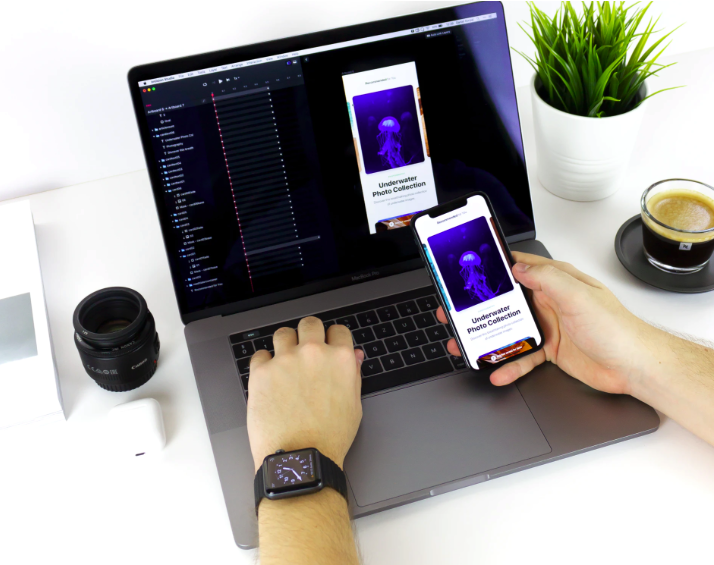
Article image was created by Daniel Korpai.





I must say, it’s refreshing to see a blog post that acknowledges the burgeoning landscape of cross-platform app development. However, I must nitpick and point out that the inclusion of Xamarin.Forms binding for Mobile Blazor is merely an example of Microsoft’s efforts to bridge the gap between web and mobile apps, rather than a distinct solution in itself. For instance, using Flutter or React Native can also enable developers to build native iOS and Android apps with shared codebases. Nevertheless, kudos to Microsoft for exploring new frontiers in cross-platform app development!
I gotta say, this is really exciting news! I’ve been following the evolution of cross platform mobile development and it’s great to see Microsoft Blazor making waves in the space. The ability to build native iOS and Android apps using C# is a game-changer for many devs. I’m curious to know more about the future of MobileBlazorBindings and how it will integrate with existing Xamarin projects.
I’m stoked you’re hyped about Blazor! I’ve been following its progress too, and it’s awesome to see how it’s shaking up cross-platform app development services. The integration with Xamarin projects is a big plus for devs who already have existing codebases. Can’t wait to see where this experiment goes next!
I completely agree with the blog post! As a systems analyst, I’ve had hands-on experience with cross-platform mobile development using Xamarin.Forms and Flutter. Microsoft Blazor’s Mobile Bindings are an exciting innovation that allows C# developers to create native iOS and Android apps without worrying about platform-specific code. This could revolutionize web development and make it more accessible for beginners!
I thoroughly enjoyed reading your insightful article on iOS and Android App Creation using Microsoft Blazor! It’s fascinating to see how Microsoft is pushing the boundaries of cross-platform app development services, allowing developers to share code between web and mobile apps. The experimental Xamarin.Forms binding for Mobile Blazor is an exciting innovation that has the potential to revolutionize app development.
I’m really excited to see Microsoft Blazor expanding its capabilities! The Mobile Blazor bindings announced in 2020 have huge potential for cross-platform development. As a business analyst who’s worked with Cross-Platform frameworks, I can attest that this integration will simplify code-sharing between web and mobile apps. Can’t wait to explore more about this experimental solution! 😊