




How to Design a Successful Mobile App Icon in 2020

by Jul 7, 2020UIUX Design

Printer Icon
f

So, first things first. What is a Mobile App icon? The App Icon is a graphic that is used to identify a mobile app. Let’s consider that the App Icon is the first thing that the users will see in the App Store while choosing between a group of Apps of their interest. After the Mobile App is selected and downloaded, the App icon will still identify the Apps that the users have installed in their devices. 

App Icons are necessary and mandatory to have to release a mobile App. Each platform has developed its own set of rules on how to build correctly the icon for it to work across different devices. For example, we can consider an App Icon that will have its presence from mobile phones to TV Apps.

What does it take to create a Mobile App icon? From a technical point of view, an App Icon is an asset. The App icon will need to be exported in different sizes that will be used for different platforms such as mobile phones, tablets, watches, or TV. 

So, what characteristics or attributes can we work to ensure a good Mobile App Icon design? Here are some thoughts: 

Do’s while designing the Mobile App Icon. 

1. Use Branding Correctly

App Icons are not logos, but logos can undoubtedly be used as App icons. If you want to use a logo of an existing brand into a Mobile App Icon, make sure to gather the Branding Guidelines to ensure the correct use of the brand. If the Branding Guidelines allow it, be selective of what parts of the logo are put into the Mobile App (Sometimes logos are registered as a hole and the graphics cannot be separated, shown in parts or chopped). The main goal is to make the brand recognizable to the user directly and elegantly, always maintaining its essence. Colors are elements that users often use to recognize a brand. Colorimetry could be your best ally in the App Icon design when treating with an existing brand. 
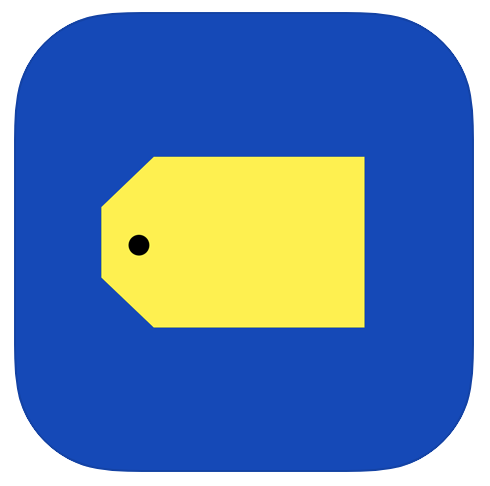
Best Buy Logo

Example: Best Buy. 

Best Buy logo has the characteristic that the tag that works as isotope is an excellent graphic choice for an App Icon. 

2. Create a unique and recognizable symbol

If you are creating a new mobile App icon, the first questions you need to ask yourself as a designer are: what is the purpose of the App? How does the App accomplish its work? Answering this set of questions can help you organize and gather concepts that could work as App Icons. As designers, we can work these concepts and use them to create meaningful graphics or symbols.  

Facetune2 Logo

Example: Facetune2. 

The Facetune2 Mobile App Icon captures both concepts of the Mobile App’s primary purpose: the ability to modify attributes of photos of faces and the action itself of altering represented by a range and scale of a semicircle. 

3. Consider your competition. 

Your App will be sharing the same space with other Apps that maybe your competition. It is essential to make a graphical competitor analysis. If the functionality of the mobile App is similar is most likely that the same concepts are in use for the App Icon design. That’s why it is essential to create a graphic differentiator factor in the Mobile App Icon. This differentiator could be by color, shapes, visual style, etc. 

Microsoft To-Do Logo
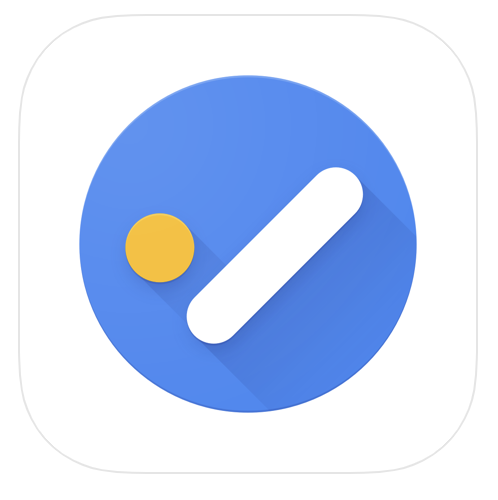
Google Tasks Logo
MinimaList Logo

Example: Microsoft To-Do. Google Tasks. MinimaList

All three mobile apps share the same functionality. Each of them chose to adopt the same symbol, in this case, the checkmark. But all three decided to represent it differently by color and shape graphically. Even tho graphically are different, use the same symbol may not be convenient for a useful differentiation. 

4. Be consistent with the App content. 

Another element that can be used as inspiration while designing the App Icon is the Mobile App’s actual content. Sometimes, the UI of the Mobile App has unique graphic characteristics, taking these graphics as inspiration and use them to design the Mobile App icon is a good strategy because it gives the users the idea of what they will encounter when interacting with the App. 

Monument Valley Logo

Example: Monument Valley. 

The Design of the Monument Valley Game has been a key to its success. The Mobile App Icon’s design choice uses the main character of the game (Ida) and a context that appears in the game, such as vibrant colors, columns, and geometrics. 

5. Know platform standards

It is essential to consider the design, the attributes, and restrictions for each platform. For instance, the area to cover with the design will be restricted by the shape of the Mobile App Icon, a square, a rounded square, a circle, or irregular forms and shapes. There are many blogs and sites with resources that can help you make the graphics for the mobile app icon. But there is always important to search and consult the platform guidelines: 

iOS: https://developer.apple.com/design/human-interface-guidelines/ios/icons-and-images/app-icon/

Android: https://developer.android.com/google-play/resources/icon-design-specifications

6. Make it scalable. 

Your design needs to be functional in a variety of sizes. If the Mobile App icon graphics are too complicated, they may be confusing to understand in smaller applications. The minor use of a Mobile App Icon is the Smartwatch, and the biggest use is TV apps. Your design will need to work on the range from the smallest to the largest. 

7. Consider the Background. 

For the App Icon to be recognizable and legible, it is essential to consider the background where it will be placed. But of course, that is not something that we have control of. The background of the App Stores could be either in dark mode or light mode. When the App is already downloaded, the background of the Home of the user’s device could be a photo, a texture, or a plain color. Try to test your design of the Mobile App Icon in as many backgrounds as possible to ensure its function. 

Dont’s while designing the Mobile App Icon. 

1. Try not to use words 

Visuals are more attractive to the eye than texts. And when we have limited space as in the App Icon, usage of texts – words could be contra-productive. Also, consider the user of the mobile App and the language that it speaks, if you use words in the mobile app icon, it may not be understandable in some languages. 

2. Try not to use photos. 

For its nature, photos can be simple or complex, but the amount of information inside them makes them a weak element to use as App Icon. Also, items in a photo could not be understandable in small applications. 

3. Do not make sudden design changes. 

It is crucial that if the Mobile App is already in the market, design changes are gradual and consistent with what the user is used to see. Experimenting with sudden and completely different designs could confuse the user about what it is referring to. 

To conclude.

The design of the mobile app icons could be as simple or complex as we designers want. The important thing is that our design is visible, recognizable, and coherent with the mobile App. Explore as many concepts and options that you feel are needed, test them, and improve your design. Have fun with the process.  

About Us

Krasamo is a UI UX Design Agency with experience creating delightfull applications, using a customer-centric approach and design thinking principles.

Learn More

16 Comments

  1. Avatar

    I completely agree with this post! Consistency is key in designing an app icon that represents your brand’s identity. If you’re working with a web design company, they can help you create a cohesive visual language across all your platforms. For example, if your app has a bold and colorful UI, incorporate those same elements into the icon to give users a sense of familiarity. Thanks for sharing this insightful post!

    Reply
  2. Avatar

    I completely agree with you on this one! As a business analyst specializing in UIUX design, I’ve seen firsthand how important it is to create an iconic mobile app icon that resonates with users. In fact, a well-designed icon can be a major differentiator for your brand and increase downloads. When working with a UIUX design agency, make sure they’re aware of platform standards and guidelines (like the ones you linked) to ensure a seamless user experience across both iOS and Android!

    Reply
  3. Avatar

    I totally agree with your points on creating an effective mobile app icon! Working with a top-notch uiux design company can make all the difference in crafting an iconic and user-friendly design that resonates with your target audience.

    Reply
  4. Avatar

    I loved this post! 🙌 You’re absolutely right about considering platform standards when designing a mobile app icon. Consistency in branding guidelines is crucial across all platforms, and I’d like to add that it’s also essential to ensure the icon is scalable and adaptable for various screen densities. Thanks for sharing these valuable resources!

    Reply
  5. Avatar

    Great point about scalability! As a UIUX expert, I can attest that this is crucial for app icon design. A well-designed icon should be able to adapt to various screen sizes and resolutions. Working with a reputable uiux design company can help you achieve this goal. Testing your design on different backgrounds, as you mentioned, is also essential for ensuring legibility and recognizability. Thanks for sharing these valuable insights!

    Reply
  6. Avatar

    I completely agree with the post on designing successful mobile app icons! It’s essential to tie in the branding guidelines established for the overall brand identity, making it easier for users to recognize and associate with your app. I’d also like to add that using typography as a key element can be just as effective as graphics, think of brands like Slack or Airbnb. Great examples here too!

    Reply
  7. Avatar

    I completely agree with the importance of simplicity in mobile app icon design 📱. As a CS student with some UIUX experience, I’ve found that a well-crafted icon can greatly impact user engagement. A successful web design company often incorporates iterative testing to refine their designs. I’d add that considering platform-specific guidelines (e.g. iOS vs Android) is also crucial for effective icon design. Thanks for the insightful post! 💻

    Reply
  8. Avatar

    I completely agree with this assessment on branding guidelines for mobile app icons. As a seasoned software architect and expert in UIUX design, I would like to add that it’s essential to ensure seamless integration of the logo into the app icon while maintaining its original essence. Working with a reputable uiux design company can help streamline this process and guarantee effective implementation.

    Best regards, martim_fonseca

    Reply
  9. Avatar

    Lmao I’m loving this post 🤩! As a software engineer with some UIUX skills, I gotta agree that simplicity and clarity are key for mobile app icons. For instance, in web design company projects I’ve worked on, we often use simple shapes and colors to make our icons stand out. The Best Buy example is fire! What do you guys think about incorporating motion graphics into app icon design? 🤔

    Reply
  10. Avatar

    Loving this post on designing successful mobile app icons! I totally agree that creating a unique and recognizable symbol is key. As a dev, I’ve seen how an well-designed icon can boost user engagement. Have you considered how color plays into this? A web design company like ours often stresses the importance of color psychology in icon design. Would love to see more on that in future posts!

    Reply
  11. Avatar

    I completely agree with this approach! As a seasoned business analyst with expertise in UIUX Design, I’ve seen firsthand how crucial it is to incorporate branding guidelines into mobile app icon design. When working with an existing brand, a uiux design company can leverage colorimetry and other design principles to create a recognizable and memorable icon that stays true to the brand’s essence.

    Reply
  12. Avatar

    Love this post! As a marketer, I can attest to the importance of a well-designed app icon in user engagement. Speaking from experience, partnering with a reputable UIUX design agency can take your app’s visual identity to the next level. It’s all about creating an iconic and memorable representation that resonates with your target audience. Thanks for sharing your insights! 💡

    Reply
  13. Avatar

    I totally agree with this post! As a software engineer who’s also familiar with uiux design agency principles, i can attest that app icons play a huge role in user experience. did you know that a well-designed icon can increase engagement by up to 30%? it’s all about simplicity, contrast, and consistency. thanks for sharing your expertise on this topic!

    Reply
  14. Avatar

    Hey there! I totally agree with your points on designing a successful mobile app icon! As an IT consultant specializing in UIUX design, I’d like to add that a well-designed icon can make all the difference in standing out in a crowded market. A uiux design agency should consider creating a consistent visual identity across all platforms for maximum impact. Great post, keep ’em coming!

    Reply
  15. Avatar

    I totally agree with your assessment on creating distinctive mobile app icons! As a developer, I’ve had the pleasure of collaborating with a reputable UIUX design company to bring innovative concepts to life. The examples you provided, such as Best Buy and Facetune2, demonstrate how effective icons can be in conveying the app’s purpose. Kudos to designers who put thought into these subtle yet powerful graphics!

    Reply
  16. Avatar

    I had a similar experience when designing an icon for my company’s mobile app! We experimented with various color schemes & typography before settling on a simple yet impactful design. It really paid off in terms of user recognition & brand consistency, esp. when it comes to mobile app icon design 💡

    Reply

Submit a Comment

Your email address will not be published. Required fields are marked *

You need to sign in to LinkedIn to post a comment.

By signing in, you consent to the processing of your personal data in line with our Privacy Policy.

Related Blog Posts