
Table of Content
Local marketing refers to marketing strategies that help businesses target customers in a desired region or city. Historically local marketing included local television, radio, and print. But, as consumers migrate from local media to global entertainment brands such as Netflix and Spotify, it is becoming increasing more difficult for regional businesses to engage with local customers. To remain relevant and grow, these businesses need to master new local marking paradigms based on social and mobile engagement. This observation is not new. We are seeing an exponential growth of apps and platforms focused on local engagement intended to help businesses such as shopping malls, associations, schools, institutes, sports teams, concert venues, grow in their local community. These solutions build on the social local mobile paradigm to provide a channel to local customers through their mobile phones. In this article we will explore various ways of engaging local customers in increasing order of sophistication, effort, and complexity.
SoLoMo Local Marketing in Existing Apps
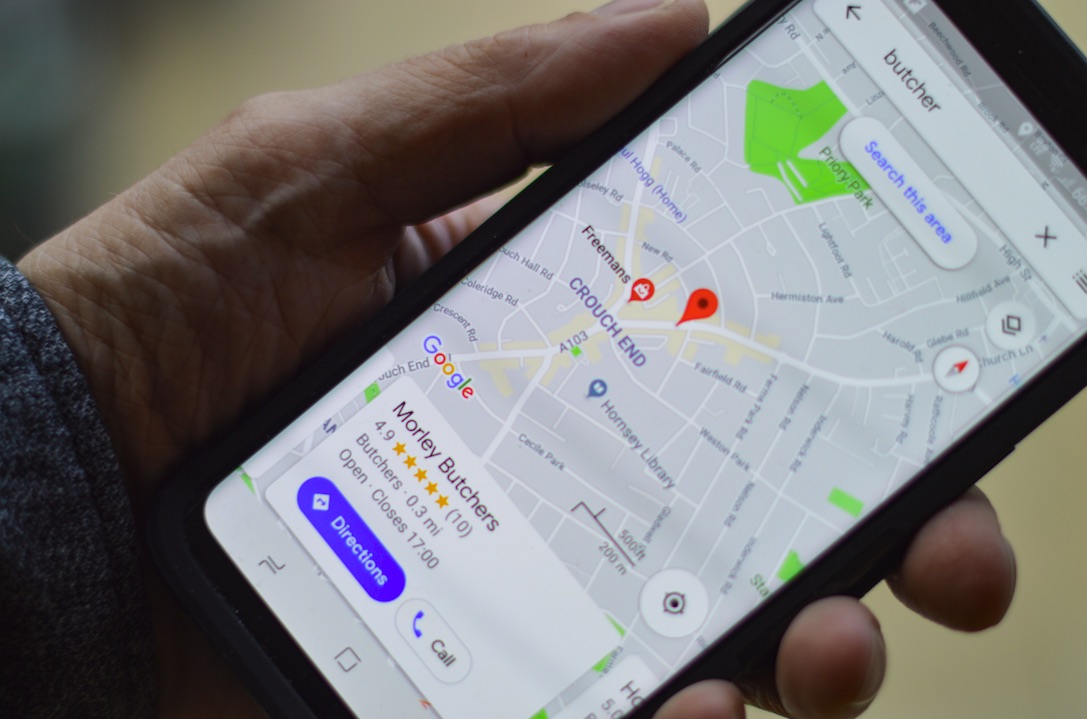
SoLoMo is an abbreviation for social mobile local marketing, which essentially refers to marketing strategies that incorporate collaborative, location-aware, and on-the-go technologies. The simplest way to engage mobile-first customers is through location-aware apps and platforms designed to promote local businesses and engagement. Google, through its ubiquitous Google Maps application, is the biggest local marketing company on the planet. But, there are many smaller players in this space including Foursquare, Yelp, GroupOn, and MerchantCircle. On these platforms participating businesses can create and publish daily deals, coupons, special events, photos, status updates, manage reviews and respond to customer inquiries. NextDoor is a more recent arrival and it seeks to create local engagement by creating location-based online communities. It is an app that allows you to communicate with the people that live in your neighborhood. There are still other platforms, like MyTime, which focus on business automation, engagement, scheduling and marketing for specific market segments, like salons.
Essentially, with this approach, you pay to leverage the existing efforts of a platform like NextDoor to build local engagement, without the expense of creating and promoting your own app. These platforms offer a low-cost and low-effort entry to local marketing. Unfortunately, this approach has its limits. You have to share limited app space and customer attention with other merchants and potentially your competitors. Your engagement with and access to potential customers is limited by the rules and capabilities of these platforms. And, at the end of the day, the users belong to the platform, not to you.
Social Media Local Marketing
Maintaining a social presence can be an effective and free way of creating local buzz. Social presence on platforms like Instagram, Facebook, X, TikTok, or YouTube can be an excellent way to promote your business and keep potential customer engaged. Providing the community with free videos, presentations, or tutorials gives the community a sense that your business cares and knows about the community. You need to provide something of value (e.g. informational, educational, or entertainment value) to keep your audience growing. While building a social presence is theoretically free, creating content that your followers and customers value can be time consuming. If you cannot do it in-house, you will need to hire a company to create that content for you. Furthermore, it is difficult to measure the direct impact social media has on generating new business or what type of content is most appealing to your target customers. Thus, it is important to learn how to measure the relevance of your social presence to your business in order to identify the best content and justify the continued investment.
It is also worth noting that social media platforms like Instagram and Twitter are social and mobile but they are not location-aware. If you operate a shopping mall in Phoenix Arizona, attracting followers on Instagram in Chicago Illinois may not be relevant to your business. It is difficult, but not impossible, to identify the locality of potential followers on Instagram. Thus, you need to lean how to target relevant followers or work with a company that can help you get the most millage out of your limited resources.
Semi-Custom Loyalty Apps
Social platforms give you the ability to directly communicate with your potential customer but they provide very limited infrastructure for managing and scaling that communication. Most social platform provide the ability to post some content and they provide some very basic features for the follower to reply, either by liking your content or posting a text reply. To scale that bi-directional communication, you need an app that drives users to take action through a scalable flow. The first step down that path are semi-custom engagement apps, sometime also called loyalty apps. We are starting to see solutions that enable small businesses to quickly customize an app that has been developed generically to fit a particular purpose or market segment. You can get a “semi-custom” app in just a few days that has been skinned with your company name and brand. These services can also aid you with cookie-cutter marketing strategies.
Local Marketing through Custom Apps
While the semi-custom approach may work for some common business types, this approach will be insufficient for businesses that seek more specialized engagement models or have content that does not fit a standard paradigm. A custom app can be tailor-made for the desired content and engagement model. Custom apps can also incorporate location-aware strategies for local marketing through the use of geofencing. The good news is that mobile development industry has recognized the need for rapid development of cross-platform mobile apps that can provide a custom engagement model at an affordable price. Mobile platforms such as Flutter and React Native allow for rapid app development. While headless content management systems (CMS) such as Flamelink allow marketing people to easily manage and update content in the mobile app after it has been released. Thus, custom mobile apps have become easier and cheaper to write and maintain. It is also worth noting that, from a total cost of ownership point of view, it may be less expensive to develop a custom app than forcing a generic app to provide a solution for which it was not originally designed for.
Local Need in Texas
In my opinion, nobody understands “local need” better than, well, a local. This why I believe that when making a local app, choosing a local mobile app company may be your best choice. If you need an app or mobile social local marketing for your business and you are located in the Dallas/Fort Worth, Austin, Houston, or San Antonio, choosing a Texas based mobile app company is the best approach. Transportation, weather, standard of living, general population preferences, and demographics are just some of the most basic differences that a local provider will understand best. Krasamo is a mobile solutions company based in Dallas, TX. We understand Texas and mid-west values. We speak your language and we can help you build an engaging relationship with your customers.
Acknowledgements:
Article image was created by Henry Perks.