
Impact Analysis in Change Control: How Engineering Teams Evaluate Change Requests
By understanding how each change affects the system and project plan, teams can make informed decisions while maintaining control and predictability.

Impact Analysis in Change Control: How Engineering Teams Evaluate Change Requests
When software teams introduce a change, whether to add a feature, adjust a workflow, modify an integration, or address new business requirements, the change may seem simple on the surface. But even small adjustments can produce wide-ranging effects on architecture, data models, performance, UX, downstream systems, and long-term maintainability.
This is why engineering organizations implement changes through a formal process. They rely on a structured practice known as Impact Analysis.
Impact Analysis is the disciplined examination of what a proposed change will affect, what it will cost, and whether it should be approved. It ensures that decisions are made with full visibility before any engineering effort is committed.
Why Impact Analysis Matters
Impact Analysis ensures that each proposed change is evaluated before it becomes work. Dependencies are uncovered early. Budgets and resources remain aligned. Schedules remain predictable. System integrity is preserved. Decisions are made deliberately, with full technical visibility.
By approaching change in this structured way, teams maintain stability while still adapting to new information. Impact Analysis turns change into a managed, predictable part of delivery.

Change Impact Visibility
Scope and Cost Evaluation

Dependency Awareness

Controlled and Predictable Delivery
The Impact Analysis Workflow
A structured Impact Analysis examines the change from several angles. Each step provides a different layer of visibility, helping teams make informed decisions with clear trade-offs.
1. Identify All Affected Requirements
Every change touches something in the original requirements set:
- Functional rules
- User workflows
- System behaviors
- Constraints
- Quality attributes (performance, security, reliability)
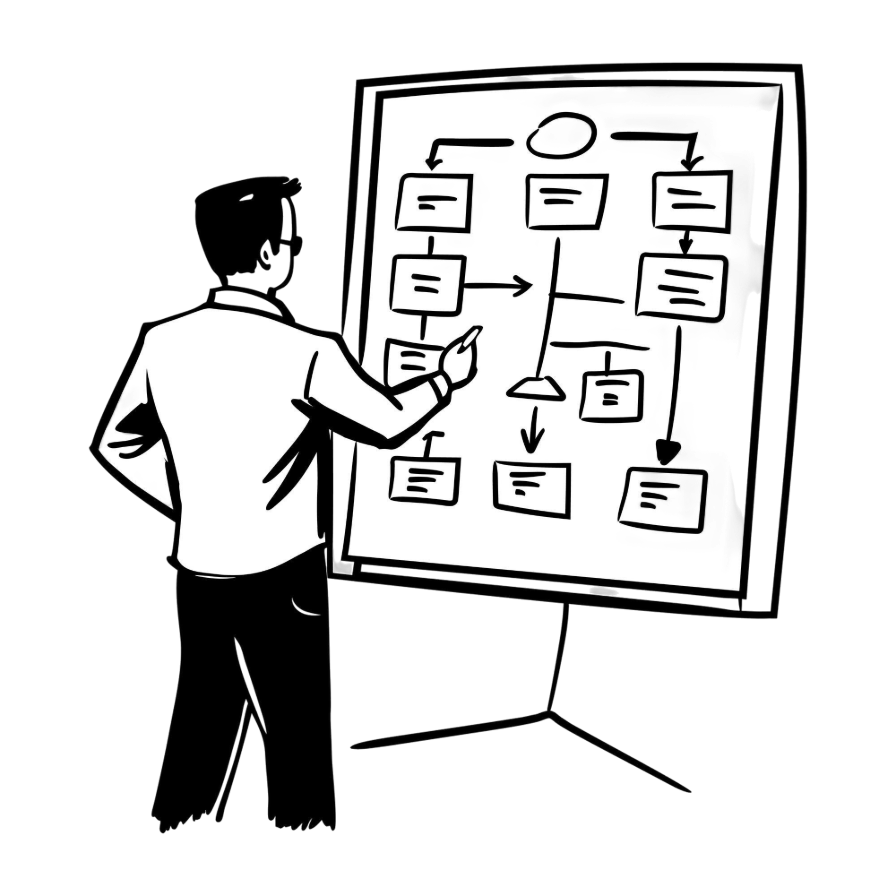
Teams map the change request back to the requirements it modifies or adds. This prevents “silent changes” that alter behavior without being documented—one of the most common sources of scope drift.
2. Identify All Affected Components
Next, the team assesses which parts of the system would be impacted:
- APIs and integrations
- Backend services
- Databases and data structures
- UI flows
- Business logic
- Infrastructure or configuration layers
- External dependencies
This step often reveals impacts that were not obvious when the request was submitted.
3. Quantify Engineering Effort
Only after identifying the affected requirements and components can effort be estimated realistically.
This includes:
- Design adjustments
- Code modifications
- Test case updates
- Regression testing
- Documentation changes
- Deployment and monitoring considerations
This step converts a conceptual change into a measurable technical commitment.
4. Evaluate Ripple Effects
Changes rarely stay isolated. Engineering teams assess second-order effects, such as:
- Performance degradation
- New failure modes
- Additional complexity in future features
- Data consistency or migration implications
- Effects on security posture
- Impacts on integrations or third-party systems
Ripple effects often determine whether a change is feasible within budget—or whether it introduces risks that outweigh its value.
5. Assess Architectural Consequences
Some changes require architectural modifications, such as:
- New service boundaries
- Adjustments to domain models
- Additional infrastructure components
- Higher availability requirements
- Revised caching or data-access strategies
At this stage, architects evaluate whether the change:
- fits cleanly within the existing architecture,
- requires a controlled extension, or
- conflicts with long-term technical direction.
This is one of the most critical safeguards against accumulating technical debt.
6. Approve, Reject, or Defer
With a complete understanding of scope, effort, risk, and architectural impact, stakeholders can make an informed decision.
A change may be:
- Approved, if it delivers sufficient value relative to its cost and risk
- Rejected, if the trade-offs are not justified
- Deferred, if it is important but should be scheduled later to reduce disruption
This structured decision prevents impulsive changes and keeps the project aligned with business goals and budget constraints.

Ready to Start Building Your Project?
If you are ready to move forward, let’s begin the conversation. Schedule your free, no-obligation Discovery Call to discuss how our process can help you achieve your project’s goals.
How Impact Analysis Supports Change Control
Impact Analysis is the analytical core of a disciplined Change Control process. Together they ensure that:
- changes are visible and documented
- decisions are made with full technical understanding
- teams avoid informal scope creep
- budgets and timelines stay predictable
- architecture remains coherent and maintainable
Without Impact Analysis, Change Control becomes guesswork. With it, organizations gain a structured mechanism for evaluating trade-offs and protecting the integrity of the project.
Impact Analysis During Krasamo’s Delivery Process
Because the evaluation is structured and repeatable, stakeholders always understand the consequences of a change before committing to it. This prevents surprises downstream and keeps the project stable and predictable, even as new information becomes available.
A Foundation for Predictable Software Delivery
Impact Analysis provides a structured way to evaluate each change, ensuring decisions are informed, predictable, and aligned with project goals. It ensures that every modification—large or small—is evaluated for scope impact, cost, timeline, technical risk, architectural alignment, and long-term maintainability.
For organizations investing in custom software, this level of discipline provides the structure needed to keep projects stable, predictable, and aligned with their intended outcomes.
Build Software with Confidence and Control
If you want to strengthen how changes are evaluated throughout your project lifecycle, our Discovery Process provides the structure to establish clear requirements, define architectural boundaries, and support disciplined change control. We invite you to explore how Krasamo applies these practices to create predictable, well-managed software delivery.

Doing Business with Krasamo

Discovery
Process

Models

Management

Architecture

Kickoff

Maintenance

Requirements

& Vendor Indep


Documentation
Control
Software Cost
Work

Assurance


Formation

Analysis
Process
Work
& Vendor Indep
Management
Documentation
Kickoff
Analysis
Software Cost
Requirements
Models
Assurance
Architecture
Formation
Control
Maintenance