
Planning Software Maintenance Early for Long-Term Project Value
Addressing maintenance requirements during the discovery process establishes a clear, transparent foundation for sustainable and cost-effective software delivery.
Planning for Software Maintenance
When organizations invest in custom software, the strategic focus is almost always on the “Build” phase. Stakeholders discuss features, timelines, architecture, and launch dates. Yet, the long-term return on investment (ROI) of any digital asset is determined not during development, but after it goes live.
For many buyers, Software Maintenance is the least understood phase of the project lifecycle. It is often viewed as a secondary concern—a line item for “support” or “bug fixes.”
In reality, maintenance is the continuous engineering discipline responsible for keeping your software secure, stable, and aligned with your business goals. Given that a successful software product will spend the vast majority of its lifecycle in maintenance, understanding this phase is essential.
The gap between a well-maintained solution and one lacking a strategic plan becomes apparent quickly. While a properly maintained system scales with demand and adapts smoothly to change, a system without this support generates friction, outages, excessive support calls, and unpredictable costs. The difference is rarely the software itself, but the quality of the engineering.
This document provides a foundation for understanding the engineering standards, cost drivers, and long-term considerations that shape how software projects are built and maintained.
Defining Software Maintenance
Software Maintenance is the engineering discipline responsible for keeping your software secure, stable, and aligned with your business goals.
There is a common misconception that maintenance starts only after the launch. Mature development teams plan for maintenance during the design phase, ensuring the product is built for long-term sustainability.
Once deployed, your software enters a dynamic ecosystem:
External
Dependencies
Security
Standards
Business
Requirements
Hardware &
Equipment
- External Dependencies: Browsers update, cloud platforms deprecate APIs, and third-party integrations evolve.
- Security Standards: New vulnerabilities are discovered regularly, requiring proactive patching.
- Business Requirements: As your business grows, users will demand optimized workflows and new features.
- Hardware and Equipment: In connected products and device-based systems, maintenance may also be driven by part obsolescence, cost-reduction efforts, manufacturing improvements, or new product features. These changes often require software updates to maintain compatibility and support revised components.
A robust maintenance strategy ensures your system adapts to these changes, preventing the asset from degrading over time.
The Four Pillars of Maintenance
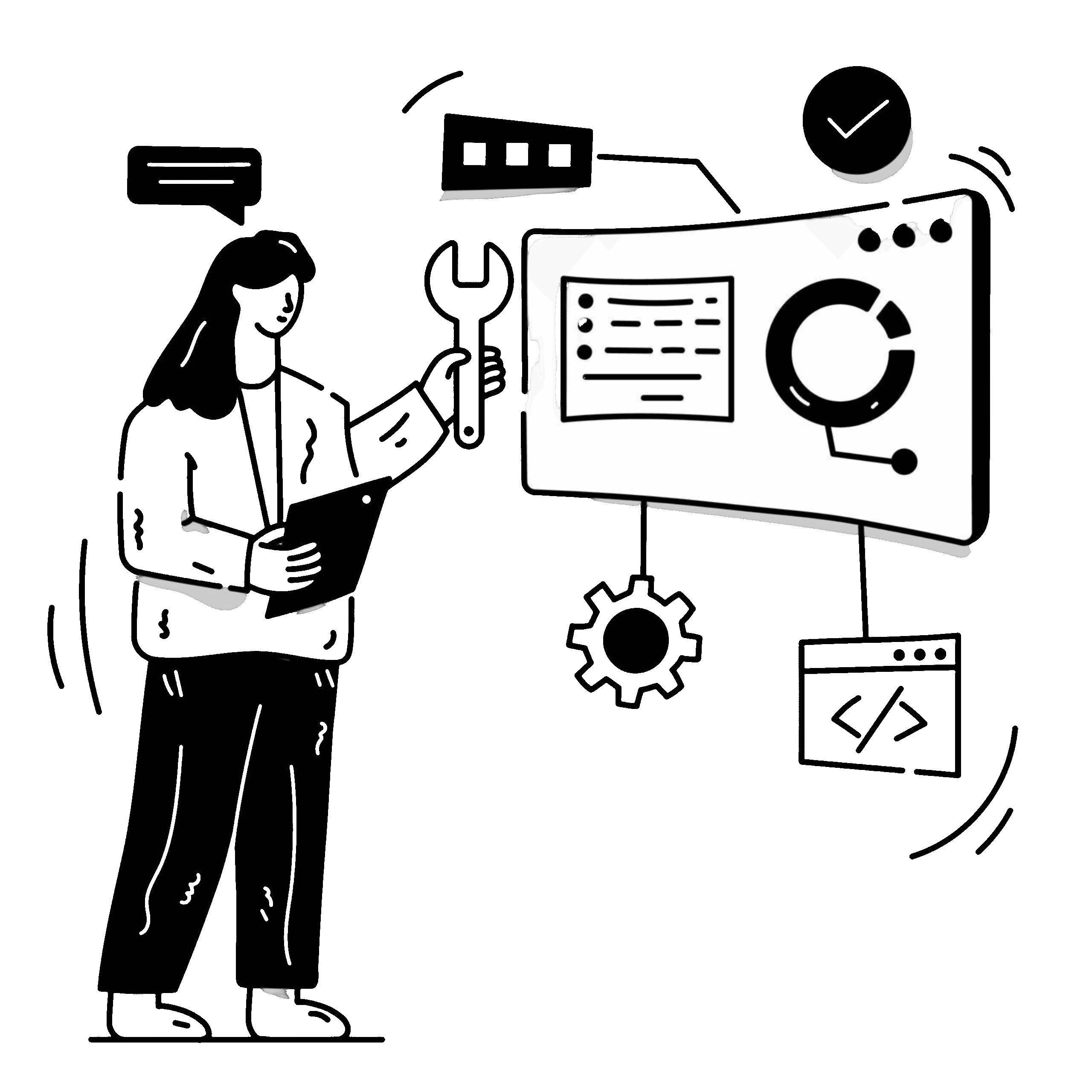
To assist in budgeting, software engineers categorize maintenance into four distinct areas. Understanding these clarifies how resources are utilized.
It begins with Corrective Maintenance, which addresses any defects discovered after release. While rigorous testing minimizes these issues, no complex system is entirely immune to defects; a professional process ensures these are resolved quickly through a structured support workflow. However, in a healthy project, this should not be the primary cost driver.
More frequently, resources are allocated to Adaptive Maintenance. This ensures your software remains compatible with a changing environment, such as updates to mobile operating systems or third-party integrations. This work is mandatory for operational continuity; without it, an asset quickly faces obsolescence.
Simultaneously, your investment generates new value through Perfective Maintenance. This category typically represents the majority of a healthy maintenance budget, as it focuses on improving performance, refining the User Experience (UX), or adding new capabilities to match your evolving business goals.
Finally, we employ Preventive Maintenance to reduce long-term risk. This involves “refactoring”—improving the internal structure of the code without changing its external behavior. This reduces complexity, ensuring that future updates remain cost-effective.
The Strategic Importance of Maintainability
We architect for Maintainability during the Discovery process, ensuring the system is built to evolve from day one. This refers to the ease with which an engineering team can understand, modify, and correct the software.
Avoiding “Technical Debt”
If a system is constructed with design shortcuts, unstructured code, or rushed patches, it accumulates “Technical Debt”. This acts as a tax on your future budget: every subsequent change takes longer to implement and carries a higher risk of failure. Even highly skilled developers slow down dramatically when they have to navigate a system that is difficult to understand.
Portability and Independence
At Krasamo, we prioritize industry-standard architecture and clear documentation to ensure Portability. A well-architected system is transferable; it can be managed by our team, your internal IT department, or another vendor. This approach mitigates the risk of “vendor lock-in.” You retain a partnership with us because we continue to deliver value, not because the system is too complex for anyone else to manage.
The Tools of Modern Maintenance
Professional maintenance is supported by a sophisticated ecosystem of tools. During our technical design phase, we integrate these systems to ensure long-term stability:
- CI/CD Pipelines: Automated deployment systems that allow us to test and release updates reliably, ensuring that changes do not introduce regressions.
- Impact Analysis Tools: These allow engineers to assess the potential risks and dependencies of a proposed change before implementation.
- Performance Monitoring: Automated systems that track application health, alerting the team to anomalies often before they impact the end-user.
Ready to Start Building Your Project?
If you are ready to move forward, let’s begin the conversation. Schedule your free, no-obligation
Discovery Call to discuss how our process can help you achieve your project’s goals.
Structuring the Engagement: The Commercial Model
Transparency regarding long-term costs is critical. Most custom software projects require balancing budget predictability with operational flexibility. At Krasamo, we intentionally avoid mandatory retainers in order to minimize ongoing client burden and provide greater flexibility as business priorities evolve.
Instead, we typically work through a flexible Time & Materials model for maintenance, enhancements, and support activities. This allows clients to scale development efforts up or down based on current needs, priorities, and budgets, without being locked into fixed monthly commitments for services they may not always need.
This approach gives organizations the freedom to:
- accelerate feature development when innovation is a priority,
- address maintenance and operational needs as they arise,
- and optimize spending according to business conditions.
We believe this flexibility is a significant advantage for clients seeking long-term partnership without unnecessary operational overhead. (Learn more about engagement models)
“Discovery Call” Preparation Checklist
As you prepare to discuss your project, consider these key questions regarding the long-term lifecycle of your solution:
- Documentation: Will technical documentation and API guides be provided to ensure future transferability?
- Testing Strategy: Does the maintenance workflow include automated regression testing to protect system stability?
- Change Management: What is the formal process for requesting, estimating, and approving new features?
- Transition: What is the protocol for handing over code repositories and access credentials upon project completion?
- Dependency Management: How does the team handle updates to third-party services and operating systems?
Next Steps
Successful software is a long-term asset, not a one-time expense. Think of it as creating a living system that continues to evolve and adapt over time. By addressing maintenance and long-term support requirements during the Discovery Process, you protect your investment and ensure your solution can grow alongside your organization.
We are ready to discuss these details and design a lifecycle plan that supports your strategic goals.
Explore Our Discovery Process and See How We Build Your Blueprint for Success

Doing Business with Krasamo

Discovery
Process

Models
Management

Architecture
Kickoff
Maintenance

Requirements
& Vendor Indep
Documentation
Control
Software Cost
Work
Assurance
Formation
Analysis
Process
Work
& Vendor Indep
Management
Documentation
Kickoff
Analysis
Software Cost
Requirements
Models
Assurance
Architecture
Formation
Control
Maintenance