
Software Project Risk Management
Risk management is a disciplined approach to identifying potential risks, evaluating their impact, and making informed decisions throughout the development lifecycle. By proactively addressing uncertainty, teams can maintain control, reduce disruptions, and deliver reliable results in complex software projects.

Software Project Risk Management
Software project issues typically stem from multiple contributing factors rather than a single isolated event. When early uncertainties are not clarified or resolved, they gradually influence cost, schedule, scope stability, architectural choices, and operational performance. In software engineering, risk reflects these areas of uncertainty and their potential impact on delivery.
Effective risk management is a proactive discipline. It begins before design and development and continues throughout delivery. Organizations that surface assumptions, evaluate them systematically, and monitor them consistently are far more likely to achieve predictable outcomes and avoid late corrective work.
Understanding the Nature of Risk in Software Engineering
Four areas consistently create risk in custom software delivery:
1. Requirements and Scope Uncertainty
When business rules, workflows, exceptions, integration behaviors, or non-functional expectations are unclear, downstream work becomes unstable. Missing or ambiguous details surface later as rework, re-planning, or scope adjustments. (Related: Requirements Management)
2. Architectural and Technical Assumptions
Architectural choices, such as platforms, integration patterns, and infrastructure models, inherently embed assumptions about scale, performance, reliability, and data flow. When those assumptions do not match real conditions, technical risk emerges and can require corrective design work.
3. External Dependencies
Hardware readiness, API maturity, data availability, cross-team coordination, and regulatory considerations introduce uncertainty the delivery team cannot fully control. These factors commonly affect sequencing, timeline, or architectural approach.
4. Organizational and Process Factors
Operational realities such as limited SME availability, unclear roles, decision-making delays, environment setup issues, or QA bottlenecks can affect project momentum as much as technical constraints. Talent availability and skill gaps, whether on the client side or within the engineering team, also introduce delivery risks that must be managed deliberately.
Understanding these categories provides a structured view of where uncertainty originates, how it propagates, and when it must be addressed.

Requirements & Scope Uncertainty

Architectural & Technical Assumptions

External Dependencies

Organizational & Process Factors
Risk Across the Project Lifecycle
Risk evolves as a project moves from concept to operation. A structured approach recognizes that different phases surface different types of uncertainty and therefore require different management activities.
Concept and Discovery
The highest concentration of uncertainty occurs before development begins. Teams examine assumptions, map constraints, and evaluate feasibility during this phase. Clarifying functional and non-functional requirements at this stage reduces risk in sizing, architectural direction, and delivery planning. Identifying unknowns at this stage helps determine which areas require investigation, prototyping, or targeted de-risking analysis before commitments are made. (Related: Scope of Work)
Design Phase
As architectural options are evaluated, technical and operational risks become clearer. Integration points, performance expectations, data flows, security implications, and scalability requirements are validated against real constraints. Validating assumptions is one of the most effective ways to reduce technical and operational risk.
Development and Integration
During implementation, risk shifts toward execution. Indicators such as defect patterns, rework, integration failures, and throughput variability reveal emerging issues. Continuous monitoring during this phase helps teams respond before deviations turn into major corrective efforts.
Testing and Deployment
Risk focuses on operational readiness. Data quality, environment stability, system performance under realistic conditions, and user-adoption factors must be validated. Stress, volume, and integration testing often expose edge cases not visible earlier.
Operational Phase
After deployment, risk transitions to maintainability, incident response, long-term scalability, and the software’s ability to adapt to new requirements. By this stage, many assumptions are no longer easily reversible, underscoring the value of addressing uncertainty before architecture and code become difficult to change.
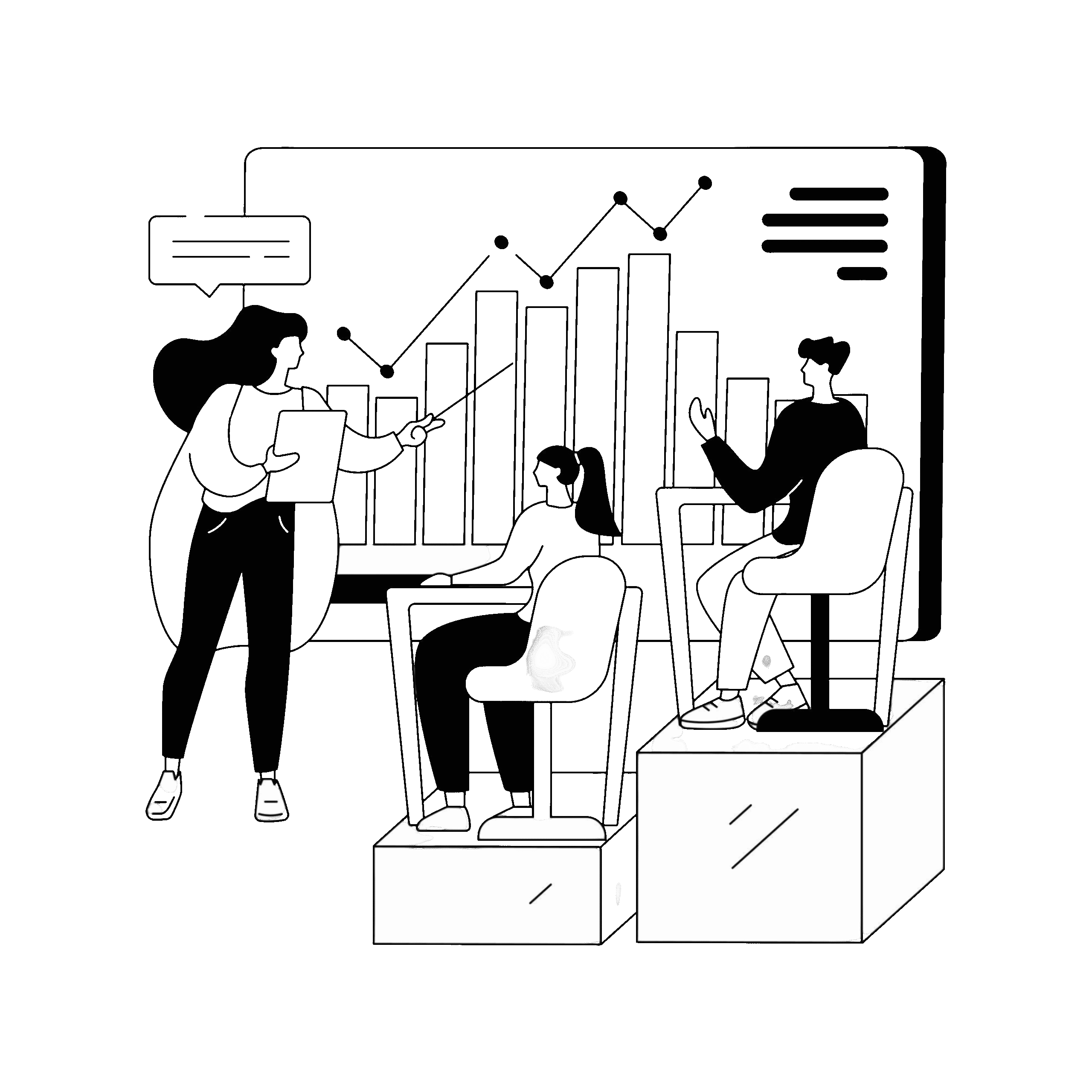
How Risks Are Identified, Analyzed, and Prioritized
Project risks are surfaced, examined objectively, and addressed before they affect delivery. Effective risk management centers on three activities: identification, analysis, and prioritization.
1. Identification
Risks come from multiple sources, and they rarely emerge in a single meeting. They are identified through activities such as:
Requirements and workflow reviews
Stakeholder interviews and clarification sessions
Architectural and integration analysis
Technical feasibility assessments
Environment and deployment-readiness reviews
Assumptions are examined directly rather than left implied. This prevents hidden uncertainties from maturing into late-stage problems.
2. Analysis
Once identified, each risk is evaluated to understand its significance. Teams assess:
Probability: How likely the risk is to occur
Impact: The effect on cost, schedule, scope, or quality
Exposure: The combined influence of probability and impact
Dependencies: Factors that may amplify or reduce the risk
This transforms subjective concerns into structured information that can be compared and acted upon.
Risk responses typically fall into four categories: mitigation, avoidance, acceptance, or scheduling adjustments, depending on the nature of the risk and its exposure.
3. Prioritization
Not all risks warrant the same level of attention. High-exposure risks require action; lower-exposure ones may simply be monitored. Prioritization ensures that engineering, product, and leadership teams focus effort where it provides the greatest benefit.
Monitoring and Controlling Risk During Delivery
Risk management does not end once development begins. After risks are identified and analyzed, they must be monitored throughout delivery to ensure exposure does not increase as new information surfaces.
Monitoring focuses on keeping risk exposure visible throughout delivery:
- Reviewing risk status at planned checkpoints, such as milestone reviews or sprint sessions
- Tracking whether exposure is rising, declining, or stable
- Adjusting mitigation plans as technical or business conditions evolve
- Adding new risks as they emerge and closing those that have been resolved
These activities are recorded in a log that provides a single source of truth and keeps teams aligned as the project progresses. Controlling risk involves taking deliberate action to address items that threaten cost, schedule, scope, or system integrity. To control risk, teams take deliberate actions such as:
- Refining requirements to eliminate ambiguity
- Modifying architectural decisions before downstream work is affected
- Introducing prototypes or targeted investigations to validate assumptions
- Reallocating resources to stabilize throughput
- Strengthening testing or automation strategies to reduce defects and rework
When a risk requires adjustments to requirements, architecture, or sequencing, those changes are evaluated through a structured Change Control process to ensure alignment with project goals. That evaluation is performed through Impact Analysis, the method used to understand what a proposed change will affect and whether it should proceed.
Consistent monitoring and control keeps issues visible, prevents drift from the delivery plan, and maintains predictable momentum throughout the lifecycle.
Ready to Start Building Your Project?
If you are ready to move forward, let’s begin the conversation. Schedule your free, no-obligation Discovery Call to discuss how our process can help you achieve your project’s goals.
How Risk Influences Planning, Estimation, and Scheduling
Effort Estimates
Ambiguity forces teams to make assumptions. To compensate for unknowns, responsible estimates include contingency buffers or ranges rather than fixed numbers. Clarifying risk allows these ranges to narrow, leading to higher confidence in the budget and timeline. (Related: Engineering Decisions Drive Software Costs)
Architecture and Technology Selection
When performance or scalability requirements are undefined, the project plan cannot simply assume the “happy path.” The schedule must include time for feasibility prototypes (spikes) or proofs-of-concept. Allocating time to validate these constraints early prevents the expensive schedule delays caused by late-stage architectural rework.
Scheduling
Risk dictates the sequencing of work. Items with high uncertainty should be pulled forward, not pushed back. By scheduling “risky” features or integrations first, teams validate them while there is still time to adapt, preventing mid-project disruptions.
The Role of Traceability in Managing Risk
Traceability provides a structural way to understand how proposed changes, gaps, or missed requirements affect the system before they are implemented. By linking requirements to the design elements, code modules, test cases, and deployment artifacts that implement them, teams gain immediate visibility into the impact of any modification.
This visibility strengthens risk management by helping teams determine:
- What functionality or components are affected if a requirement changes
- Which tests must be updated, ensuring quality is preserved
- Where propagation effects may occur, reducing the likelihood of unintended impacts
When traceability is maintained throughout delivery, teams can evaluate the consequences of a change with confidence. It reduces uncertainty, supports more accurate planning, and limits the spread of defects or rework.
A Discipline That Supports Predictable Outcomes
Risk cannot be eliminated from software engineering, but it can be managed with structure and intent. Organizations that apply a disciplined approach gain earlier visibility into uncertainty, stronger alignment between expectations and feasibility, and more predictable planning and execution across the lifecycle.
A structured risk-management practice does not slow delivery. It reduces avoidable disruption, limits rework, and helps teams maintain momentum while protecting budgets and system outcomes.

Putting Risk Management Into Practice
Risk management brings clarity to planning, strengthens estimation, and reduces avoidable surprises. Reviewing upcoming or ongoing initiatives through the lens of assumptions, dependencies, and uncertainty often reveals issues while corrective options are still available, before timelines compress or software cost increases.
The following questions help leadership teams frame risk with precision and ensure alignment before major decisions are made:
- Which assumptions in our plan carry the most uncertainty?
- What dependencies could materially affect timeline or architecture?
- How are feasibility and constraints being validated?
- What is the process for revisiting risks at key decision points?
- Which risks require active mitigation versus ongoing monitoring?
These discussions create shared understanding, sharpen decision-making, and clarify where additional definition or analysis is needed before moving forward.
Start with a Discovery Process
One of the most reliable ways to de-risk a project is to surface uncertainty before design and development lock in assumptions. That is why risk management is a core part of Krasamo’s Discovery Process. During this stage, teams work to clarify requirements at a decision-ready level, map constraints, identify dependencies, and assess feasibility so that key risks are understood rather than discovered late in delivery.
If you want your next initiative to move forward with fewer unknowns and a stronger foundation for predictable delivery, begin with a Discovery engagement. It provides the clarity needed to validate assumptions, align expectations, and make informed decisions before significant commitments are made.
Explore Our Discovery Process and See How We Build Your Blueprint for Success
Doing Business with Krasamo

Discovery
Process

Models
Management

Architecture

Kickoff
Maintenance

Requirements
& Vendor Indep


Documentation
Control
Software Cost
Work

Assurance


Formation

Analysis
Process
Work
& Vendor Indep
Management
Documentation
Kickoff
Analysis
Software Cost
Requirements
Models
Assurance
Architecture
Formation
Control
Maintenance