




Table of Content
AI features can look inexpensive in a demo. In production, they can become a growing operating cost that quietly offsets the productivity gains AI was meant to deliver.
Token optimization is the practice of reducing unnecessary input, output, context, and model calls in AI systems to lower costs and latency while preserving accuracy, reliability, and task completion.
AI pilots often look manageable because they operate in controlled conditions: limited users, narrow workflows, smaller datasets, shorter prompts, fewer integrations, and reduced monitoring, security, evaluation, and operational requirements. Production systems behave differently. They carry more instructions, more context, more retrieved content, more tool results, more users, and more repeated requests.
As AI systems scale, token use becomes tied to cost, response time, throughput, and rate-limit headroom. Above all, it becomes tied to the cost of each completed workflow.
Sources of Token Waste
After an AI system reaches production, token waste rarely comes from one oversized prompt. It usually appears across the path a request follows: the context attached to it, the systems it queries, the tools it exposes, the calls it makes, and the answer it generates.
Common warning signs include:
- Repeated instructions traveling with every request, even when they rarely change.
- Conversation history carried forward after older turns have stopped helping.
- Retrieval systems returning broad document sets, large chunks, or loosely related records.
- API responses copied into the prompt with metadata, empty fields, logs, and nested data intact.
- Agents exposing or loading more tools than a task requires.
- Agent loops or repeated reasoning cycles that perform redundant planning, retrieval, tool calls, or summaries without advancing the task.
- Multi-step workflows making extra calls because handoffs, responsibilities, or output formats are unclear.
- Long answers when the process only needs a short result.
These signs matter because each one increases the work the model performs without necessarily improving the outcome. A retrieval step, for example, may bring back a large body of material when the task only needs a specific policy excerpt, product attribute, account status, date, entitlement, or short summary.
Tool use creates a similar pattern. Enterprise systems often return complete business objects for precision and traceability, while the AI step may only need selected fields, a source reference, and enough context to support the next action.
Agents can multiply the effect because they repeat the cycle across steps. A single user request can trigger planning, lookup, tool calls, intermediate summaries, retries, and final generation. If each step carries excess material forward, the total operating cost grows before anyone sees the final answer.
Output design deserves separate attention. Many commercial LLMs charge different rates for input and output tokens, and output tokens are often more expensive than input tokens, and long responses also add latency. Many workflows do not need a full explanation when a compact answer, decision, status, or structured set of fields would serve the user or downstream system.
The practical question is simple: which parts of the process are paying for material or model calls that do not support the task? Once teams can see that pattern, they can reduce cost and latency with more confidence.
Main Methods for Reducing Token Use
Token optimization works best when teams improve several parts of the AI workflow together. The goal is to reduce unnecessary model activity while preserving the quality of the result.
Key methods include:
- Measurement and visibility: Track token use by workflow, task, model, tool call, retrieval step, and output. Cost is more useful when measured at the level of the completed task, including the calls, tools, outputs, retries, and review needed to finish the work.
- Context engineering: Decide what information the model needs, how it should be organized, and when it should be removed, refreshed, or summarized. This includes instructions, user history, retrieved records, policies, tool results, and workflow state.
- Caching: Reuse stable instructions, policy text, product information, summaries, or repeated task patterns when freshness and privacy rules allow it. A useful cache strategy defines what can be reused, who can access it, and when it expires.
- Selective retrieval: Retrieve fewer, more relevant sources instead of sending broad document sets into the model. Smaller passages, specific records, source filters, summaries, and compressed context can reduce cost while improving answer focus.
- Output control: Match the response to what the workflow needs. A short answer, decision, status, summary, or compact structured output may be enough when the process does not require a full explanation.
- Model routing: Send each task to the right model or service. Classification, extraction, formatting, and simple summarization may use a smaller model, while complex reasoning may require a stronger one. Routing is commonly implemented in the application, orchestration layer, AI gateway, or inference gateway, depending on the architecture.
- Agent design: Use reusable agent skills (or capabilities), narrower tool sets, and specialized subagents to reduce the amount of instruction, context, and tool access carried by one large general-purpose agent. Focused capabilities can handle retrieval, code search, summarization, or classification with less overhead.
- Tool-result shaping: Filter, summarize, or structure API responses before they reach the model. Enterprise systems often return full records with metadata, logs, timestamps, and nested fields. AI workflows usually need a smaller working representation containing only the fields required for the task, along with a source reference when traceability is needed.
- Evaluation: Check that token reductions preserve accuracy, reliability, permissions, and task completion. Agent evaluation, regression tests, review samples, and user-correction signals help teams avoid savings that create rework.
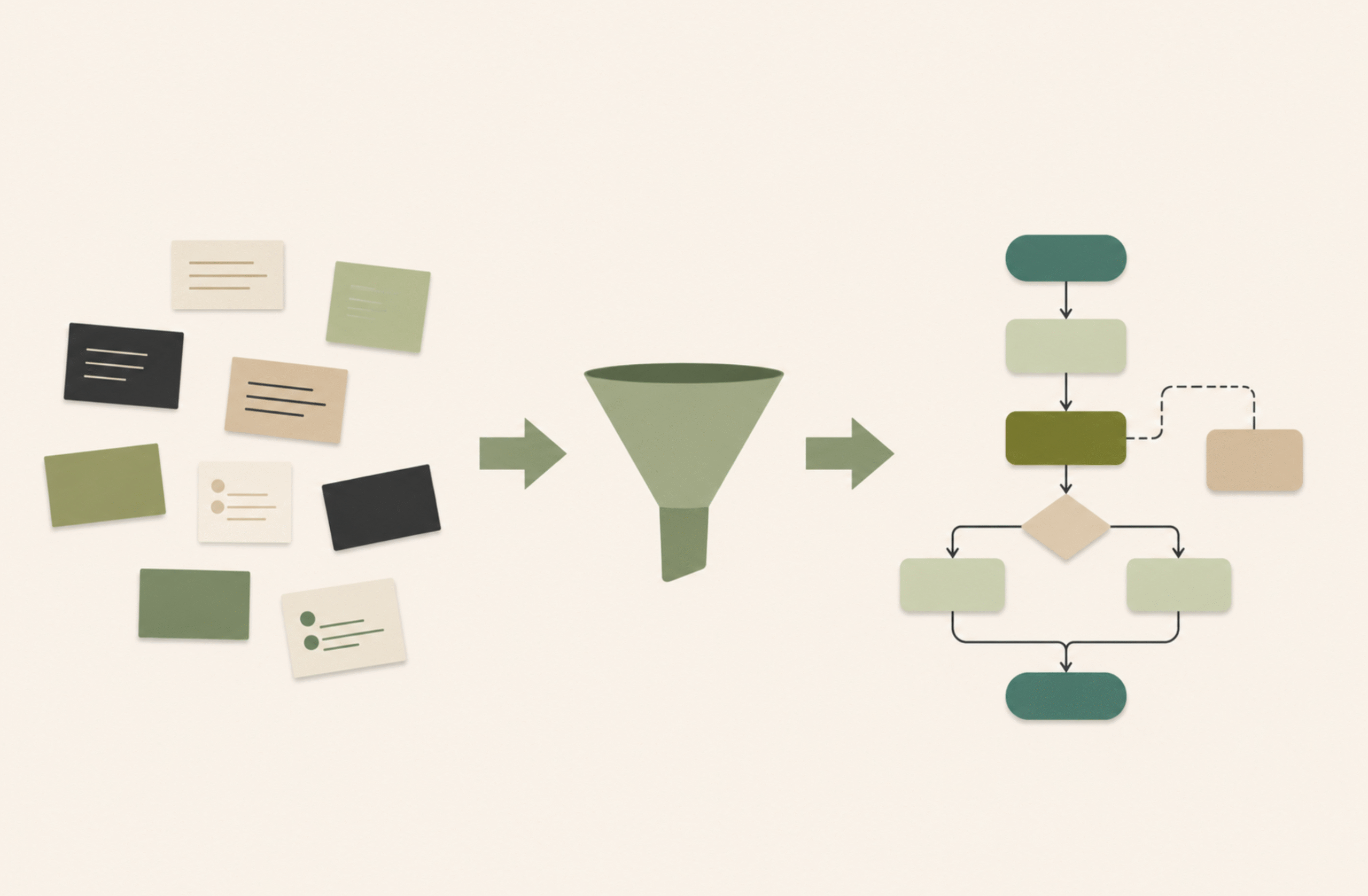
These methods are strongest when they are designed into the production AI architecture. Durable optimization comes from deciding how information, model calls, tools, outputs, and quality checks work together across the workflow.
How to Identify Token Optimization Opportunities
Business leaders do not need to manage every prompt, model call, or retrieval rule directly. They do need enough visibility to know whether AI systems are using tokens in ways that support the business outcome.
A practical review can start with six questions:
- Where is token use concentrated?
Identify which workflows, users, models, tools, or agent steps consume the most tokens. - Which tasks become expensive end to end?
Measure the full business activity, including retries, tool calls, generated output, and human review. - Is the system carrying too much context?
Look for long histories, repeated instructions, old summaries, broad retrieval results, or context that no longer helps the task. - Are retrieval and tool outputs returning more than the task needs?
Large document sets, full API payloads, logs, metadata, and nested records may need to be filtered, summarized, or shaped into a smaller working view. - Are agents taking unnecessary steps?
Repeated planning, retrieval, tool calls, and summaries can raise the cost of a workflow before the final answer appears. - Are quality checks built into the optimization effort?
Lower token use should be measured against accuracy, reliability, permissions, task completion, and user correction rates.
These questions help teams move from a general concern about AI cost to a clearer view of where optimization work should begin.
How Krasamo Helps Optimize AI Systems
Token optimization becomes more effective when it is designed into the AI system early, with visibility into context, retrieval, tools, model usage, outputs, and quality controls. Krasamo helps organizations review how AI workflows operate in production, identify where cost and latency are increasing, and define practical improvements that protect accuracy, security, and task completion.
From there, Krasamo can help design and implement improvements across the AI architecture. This may include context engineering, selective retrieval, caching strategies, output contracts, model-routing logic, reusable agent skills, specialized subagents, tool-result shaping, and evaluation workflows.
For companies building AI agents or connected enterprise AI applications, Krasamo can also help design the integration layer between models and business systems. When Model Context Protocol (MCP) is a good fit, that may include custom MCP servers that expose focused tools, curated resources, repository context, or structured system responses without sending unnecessary data into the model.
If your team is seeing AI costs rise, slow response times, agent loops, broad retrieval results, or unclear model usage, Krasamo can help you review the workflow, identify the main cost drivers, and design a practical optimization plan.
Contact Krasamo to discuss how token optimization can improve the performance, reliability, and scalability of your AI systems.