


Table Of Content
- Introduction: Choosing the Right Approach Matters
- Understanding the Three Models
- Comparison by Key Factors
- When Should You Use Each Approach?
- Common Mistakes When Choosing a Development Methodology
- A Practical Perspective
- Real-World Application: Choosing the Right Approach in Practice
- Conclusion: Context Over Preference
Introduction: Choosing the Right Approach Matters
When it comes to software development, choosing a methodology is often treated as a technical decision. In reality, it directly impacts how teams collaborate, how quickly products are delivered, and how well the final solution meets user expectations.
For years, structured models like Waterfall and V-Model were the standard. They provided predictability and control, especially in projects with clearly defined requirements. However, as digital products became more dynamic, many organizations began adopting the agile development process to better respond to change and deliver value faster.
That said, no single methodology works for every scenario. The real challenge is understanding when each approach makes sense.
In this article, we compare Waterfall, V-Model, and Agile through four key factors: flexibility, change management, customer involvement, and testing.
Understanding the Three Models
Waterfall: Clear Structure, Limited Flexibility
Waterfall is one of the most traditional approaches to software development. It follows a linear sequence where each phase is completed before moving to the next: requirements, design, development, testing, and deployment.
This model works well when everything is clearly defined from the start. Teams can plan timelines, estimate costs, and document every step in detail. That level of structure is especially useful in regulated environments.
The downside is that once development begins, making changes becomes difficult. If something shifts mid-project, it often requires revisiting earlier phases, impacting both time and budget.
V-Model: Strong Focus on Validation
The V-Model builds on Waterfall by introducing a stronger focus on testing. Each development phase is paired with a corresponding validation activity, helping teams identify issues earlier.
This makes it a strong option for projects where quality and reliability are critical. Testing is not an afterthought; it is planned from the beginning.
However, like Waterfall, it still assumes stable requirements and does not adapt easily to change.
Agile: Built for Change and Continuous Delivery
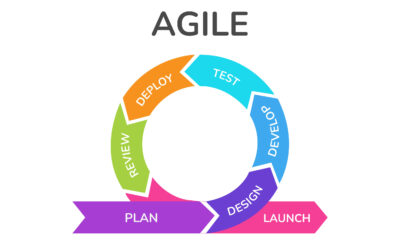
Agile takes a different approach. Instead of delivering everything at once, work is broken into smaller increments that can be developed, tested, and released in short cycles.
At the center of this approach is collaboration. A strong Agile team works closely with stakeholders, allowing feedback to be incorporated continuously instead of waiting until the end.
This way of working is supported by structured agile development practices, such as sprint planning, daily stand-ups, and retrospectives. These practices help teams stay aligned while remaining flexible.
Because of this, the agile development process is especially effective in environments where requirements evolve over time.
Comparison by Key Factors
1. Flexibility
Flexibility is one of the clearest differences between these approaches.
Waterfall offers very little room for change once the project starts. Everything is planned in advance, making it predictable but rigid.
The V-Model improves control through structured validation, but it still depends on fixed requirements.
Agile is designed to adapt. Teams can adjust priorities, scope, and features as new information becomes available. This adaptability is a key reason why the agile development process is widely used in modern product development.
2. Change Management
How each model handles change can significantly impact project outcomes.
In Waterfall, changes are typically disruptive and require revisiting completed phases.
The V-Model faces similar limitations, as changes affect both development and testing stages.
Agile embraces change. Iterative cycles allow teams to incorporate feedback continuously without losing momentum, making it ideal for evolving environments.
3. Customer Involvement
Customer involvement varies significantly across these methodologies.
In Waterfall, stakeholders are mainly involved at the beginning and end of the project.
The V-Model introduces more structured checkpoints, but interaction is still limited.
Agile promotes continuous collaboration. Stakeholders provide feedback throughout each iteration, helping ensure that what is being built truly aligns with user needs.
4. Testing and Risk Management
Testing is another critical differentiator.
In Waterfall, testing happens late, increasing the risk of discovering issues when it is costly to fix them.
The V-Model improves this by aligning testing with each development phase.
Agile integrates testing throughout the lifecycle. Practices like agile testing ensure continuous validation.
This approach aligns closely with modern software testing strategies, where quality is maintained from early stages through continuous validation. A strong focus on software testing helps reduce risk and improve overall product reliability.
When Should You Use Each Approach?
Waterfall: When Stability Is Key
Waterfall is a good option when:
- Requirements are clearly defined and unlikely to change
- Documentation and compliance are critical
- The scope is fixed from the beginning
V-Model: When Quality Is Critical
The V-Model works well in:
- Safety-critical systems
- Projects requiring strict validation and traceability
- Environments where testing must be planned early
Agile: When Adaptability Is Essential
Agile is ideal when:
- Requirements are expected to evolve
- Fast delivery is important
- Continuous feedback is required
To make Agile effective, teams need more than just processes; they need the right mindset. Strong agile leadership plays a key role in fostering collaboration, adaptability, and continuous improvement.
Teams that consistently apply agile development practices are also better positioned to scale delivery and maintain alignment across iterations.
Common Mistakes When Choosing a Development Methodology
One of the most common mistakes organizations make is choosing a methodology based on trends rather than actual project needs.
For example, many teams adopt Agile simply because it is widely used, without considering whether they have the structure, mindset, or stakeholder involvement required to make it work effectively.
Another frequent misconception is assuming that traditional models like Waterfall are outdated. In reality, they can still be the best choice for projects with stable requirements and strict regulatory constraints.
It is also common to underestimate the importance of team dynamics. Even the most effective methodology can fail if the team is not aligned or lacks the necessary experience.
Ultimately, selecting the right approach requires understanding both the methodology itself and the context in which it will be applied.
A Practical Perspective
In real-world scenarios, organizations rarely follow a single methodology in its pure form. Many teams adopt hybrid approaches, combining elements from different models.
For example, a project might use Waterfall for initial planning and budgeting, while applying Agile practices during development to remain flexible.
Understanding how these methodologies can complement each other is often more valuable than trying to choose just one.
Real-World Application: Choosing the Right Approach in Practice
While understanding the theory behind each methodology is important, the real challenge comes when applying it in a practical context. In many cases, the decision is not as straightforward as choosing one model over another. It usually involves evaluating multiple factors at once.
For example, a company developing a highly regulated financial platform may initially lean toward a Waterfall or V-Model approach due to the need for documentation, traceability, and compliance. In these environments, having clearly defined phases and validation checkpoints helps reduce risk and ensures that all requirements are met before moving forward.
On the other hand, a product team working on a customer-facing mobile application may benefit more from an Agile approach. In this scenario, user feedback plays a critical role, and requirements are likely to evolve over time. The ability to release updates frequently and adapt based on real usage data becomes a key advantage.
In practice, many organizations adopt a hybrid approach. For instance, they may define high-level requirements and architecture upfront, similar to Waterfall, while using Agile iterations during development to remain flexible and responsive. This allows teams to balance structure with adaptability, especially in more complex projects.
Another important factor is team maturity. Agile methodologies require strong collaboration, clear communication, and a certain level of autonomy within the team. Without these elements, even well-defined agile development practices may not deliver the expected results.
Ultimately, selecting the right methodology is less about following a specific framework and more about understanding the unique constraints and goals of the project. Teams that take the time to evaluate their context carefully are more likely to choose an approach that supports both delivery and long-term success.
Conclusion: Context Over Preference
Waterfall, V-Model, and Agile each offer distinct advantages.
Waterfall provides structure and predictability. V-Model strengthens quality through early validation. Agile enables flexibility and continuous delivery.
Rather than asking which methodology is better, the focus should be on which one best fits the project’s needs.
In a constantly evolving environment, the ability to adapt, whether through Agile or a hybrid approach, is what ultimately drives successful outcomes.