




Table Of Content
Introduction
If you’re looking to develop a new application, use microcontrollers, and so on, you might want to consider which technologies are most likely to stand the test of time. You don’t want the work you do today to only last one or two years and require you to completely redesign your hardware and software because of the arrival of a new communication technology.
In this article, we’ll discuss, among other things, key points to determine whether Bluetooth will remain a prominent standard in the coming years or if it will be superseded by another technology.
The Beginnings of Bluetooth
Bluetooth has been around for years, roughly since 2000, taking the Ericsson T36, the first mobile phone with Bluetooth, as a reference point. From 2000 until today, in 2026, many other technologies have disappeared, and perhaps the same will happen with Bluetooth! Or… perhaps not? Let’s take a look at the past and remember some of the most notable technologies that existed and why they died.
This way, we might have a historical reference point and perhaps notice some patterns that can help us determine what will happen in the future and whether Bluetooth could repeat any of the mistakes that led to the downfall of those technologies. For example, we’ve heard about infrared:
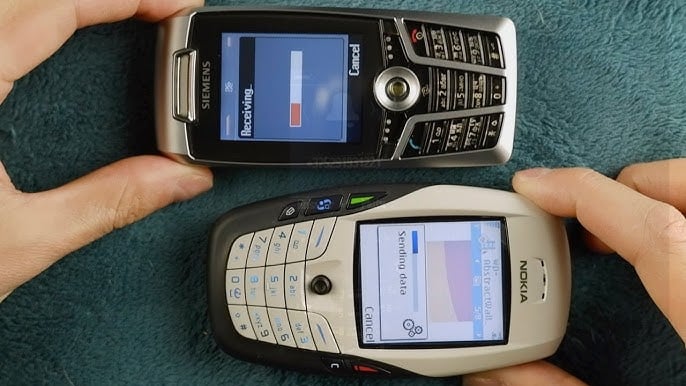
One of the most memorable! In the early 2000s, almost all phones, like Nokia and Sony Ericsson, and laptops as well, had a port that allowed data transfer via infrared light. The problem was that you had to leave the phones perfectly still, facing each other, which, after the initial excitement of trying the technology, became annoying. Bluetooth wiped it out between 2003 and 2005 by allowing connections through walls and without the need to point the device directly at them. Today, it only survives in basic remote controls (simple IR).
How does Bluetooth differ from the rest?
No technology has managed to dethrone Bluetooth because they all had an Achilles’ heel (whether it was price, power consumption, complexity, or range), and meanwhile, Bluetooth has continued to improve and adapt to meet the needs of most users.
One of Bluetooth’s most important achievements is its ability to evolve and incorporate the best ideas from its competitors, maintaining its standard status.
- Constant Evolution: Bluetooth hasn’t stood still. The introduction of Bluetooth Low Energy (BLE) allowed it to compete with Zigbee in energy efficiency. The arrival of Bluetooth 3.0 aimed to increase speed compared to Wi-Fi Direct. More recently, Bluetooth Mesh allows it to compete directly in the home automation and industrial sectors where Zigbee was strong, and Bluetooth 5.x, with improvements in range and speed, keeps it relevant.
- Ecosystem Effect: Bluetooth is integrated into virtually all phones, tablets, and computers worldwide. For 90% of everyday uses (headphones, speakers, keyboards, mice), its performance is good enough and much simpler for the average consumer than setting up an alternative like Wi-Fi Direct.
- Complementarity, Not Substitution: The future points to devices using multiple technologies in combination rather than a single technology dominating everything. For example, there’s talk of “combo” chips that integrate Bluetooth and UWB to offer the best of both worlds.
Silicon Labs and Bluetooth: Why the hardware keeps Bluetooth alive
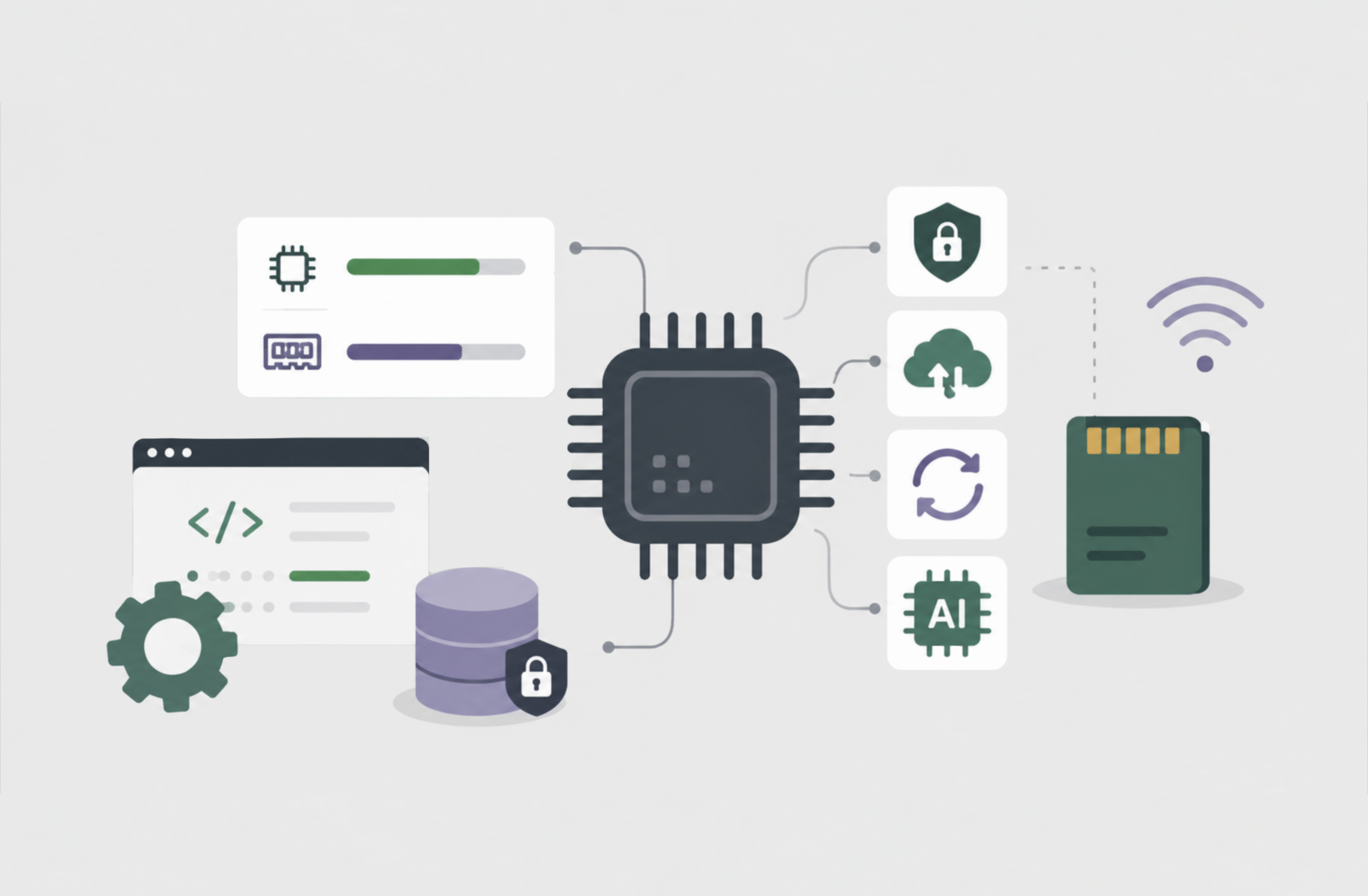
It’s clear that good software is key for a communication protocol to be efficient and highly useful, but we can’t overlook the hardware. In this sense, Silicon Labs emerges as a crucial player, not only manufacturing chips but also equipping Bluetooth with the necessary capabilities to be relevant in the IoT (Internet of Things) era.
Low power consumption that extends battery life for years
Their Series 2 devices are designed to outperform the competition in energy efficiency. For example, a Bluetooth sensor for temperature or humidity using a Silicon Labs EFR32BG22 can run for over five years on a single coin-cell battery, making it feasible for applications where changing batteries is impractical.
Innovative power management for smaller devices
Silicon Labs integrates DC-DC converters that allow chips to operate at extremely low voltages (as low as 0.8V). This enables the use of a single 1.5V battery instead of two or three, reducing costs and allowing for thinner designs perfect for modern wearables like smart rings or medical patches.
Precise battery monitoring for critical applications
The inclusion of an integrated Coulomb Counter allows accurate battery level tracking. In a continuous glucose monitor (CGM) that must last 14 days without failure, this precision ensures the patient never gets a surprise shutdown.
Security directly in silicon
Silicon Labs integrates protection directly into silicon with Secure Vault, its patented security technology designed to protect against local and remote attacks. It is one of the first to obtain PSA Level 3 certification, the highest for IoT. This is essential for medical devices, smart locks, and industrial sensors where a breach is not an option.
AI/ML acceleration on the edge
Chips like the BG24 include a vector array accelerator (MVP). This allows machine learning models to run on-device for tasks such as trigger word detection or predictive maintenance, performing up to 8 times faster and consuming significantly less power than if done on the main processor. For example, a smart vibration sensor on a factory motor can predict failures locally without sending data to the cloud.
High analog precision for biomedical signals
Silicon Labs integrates high-resolution ADCs (16 to 20 bits) to capture biomedical or sensor signals in great detail, eliminating the need for external components. An electrocardiogram (ECG) patch can thus be made smaller, cheaper, and more reliable.
In short, Silicon Labs has not only manufactured good components, but has also provided the specialized, high-performance hardware that has allowed Bluetooth to evolve, overcome its technical limitations, and colonize new markets, from automotive and home automation to the smallest and most advanced medical devices.
Practical example: Intelligent Lighting Control with Silicon Labs EFR32BG24
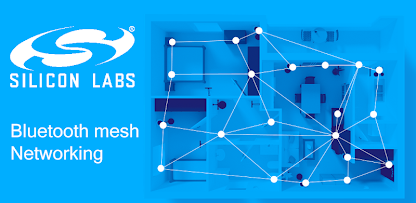
To control 50 smart lights in an office building using a mesh network, Silicon Labs provides the EFR32BG24 (Series 2) family. This microcontroller is specifically optimized to handle the routing tables and memory requirements necessary for a dense and secure Bluetooth Mesh network.
How it works with the EFR32BG24:
- Network Provisioning: Each light fixture contains an EFR32BG24 chip. Using a smartphone or a dedicated gateway as a “provisioner,” each light is granted a unique identity and security keys. Unlike Wi-Fi, you don’t need a central router; the lights form an interconnected web directly with one another.
- Message Relaying (Managed Flood): When you send a “Turn Off All” command, the message travels through the network using a controlled flooding mechanism. The EFR32BG24 chip in the nearest light receives the command and retransmits it to its neighbors. Thanks to the high radio sensitivity of SiLabs Series 2, the message penetrates walls and overcomes interference reliably.
- Low Power Nodes & Friendship: Occupancy sensors can operate as Low Power Nodes (LPN). The sensor “establishes a friendship” with a nearby light (acting as a Friend Node). The light buffers messages for the sensor while it sleeps, allowing the sensor to run on a coin-cell battery for years while remaining part of the mesh.
- Self-Healing Architecture: If a light fixture is removed or fails, the surrounding EFR32BG24 chips automatically route messages through alternative paths. The network remains functional because it does not rely on a single point of failure.
Matter and the “Bluetooth Commissioner”
Matter, is a relatively recent standard that aims to unify the connections between smart home devices, such as lighting, locks, thermostats, and more. It has developed a close relationship with Google, as you can see on its website. It appears it will achieve much of what it currently does.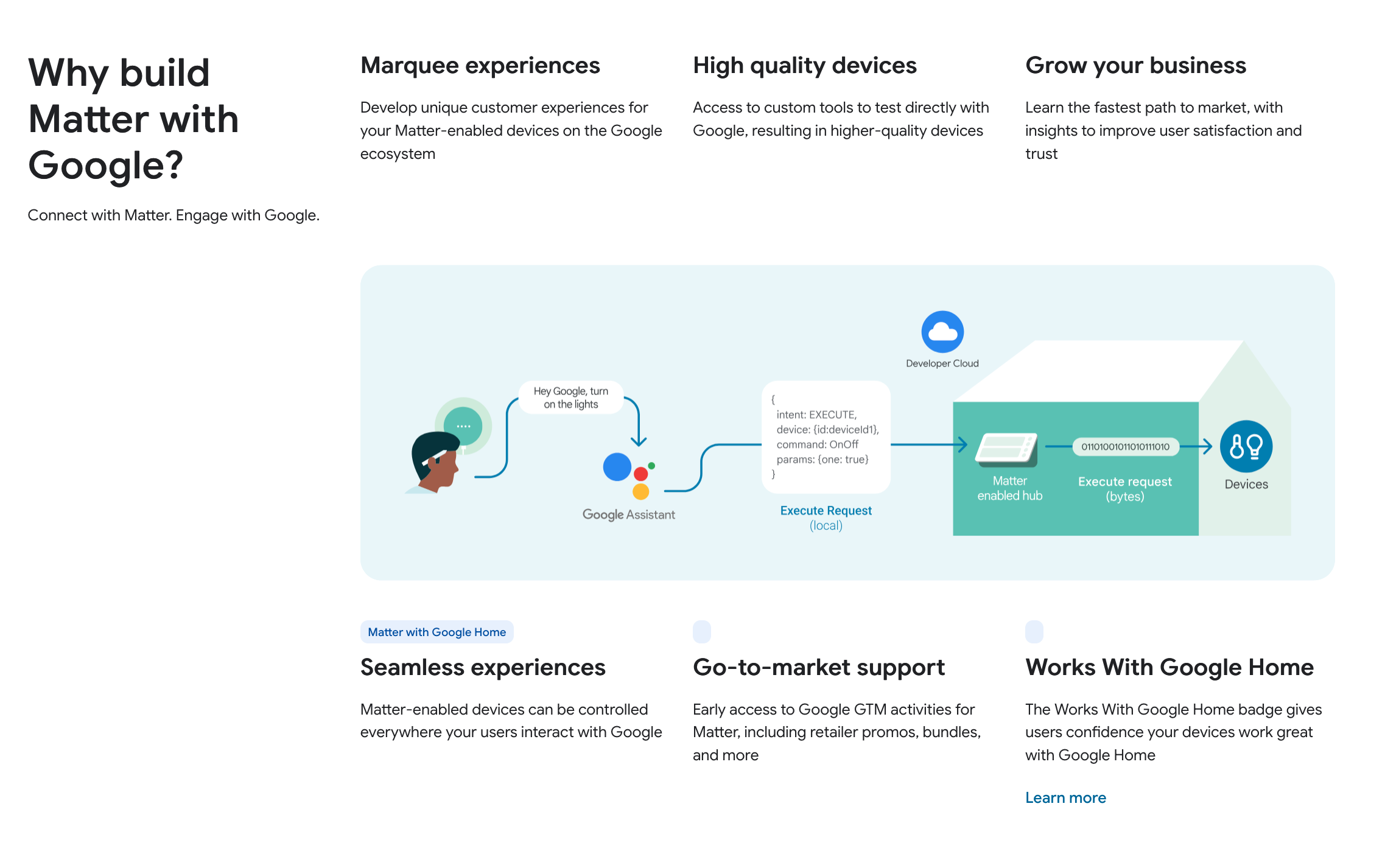
Regarding Bluetooth, any Matter device, whether it uses Wi-Fi or Thread, will use Bluetooth (specifically BLE) almost exclusively for commissioning, which means the Matter protocol handshake to add a Matter device to the network.
In developing a prototype that implements Matter with SiLabs, we encountered the SiWG917 microcontroller. It’s a very useful development circuit created by SiLabs. It serves for testing, building prototypes, and even production deployment. To add a device to a Matter network, the following steps are performed.
- Authentication: When you bring your iPhone close to the SiLabs module, Bluetooth establishes the first secure connection.
- Credential Passing: This is the channel through which the phone sends the Wi-Fi network name and password to the SiWx917.
- Logout: Once the device connects to the Wi-Fi/Thread network, Bluetooth is turned off or put into standby mode, and Matter switches to operating over IP (Wi-Fi).
The Near Future of Bluetooth
So, what can we expect in the future? Will we be able to stay focused on this technology?
Beyond mesh networking and miniaturization, Silicon Labs is integrating new radio features that enable entirely new use cases:
1. Precision Location with Channel Sounding
Recent announcements (Q1 2025) confirm the introduction of BG22L and BG24L SoCs that support Bluetooth Channel Sounding. This is the evolution of RSSI (signal strength) tracking.
The Impact: This allows for secure, accurate distance measurement between devices. Unlike previous methods, channel sounding is resistant to relay attacks, making it viable for digital car keys, secure access control, and precise asset trackers where you need to know if a device is 2 meters away versus 10 meters away.
2. AI/ML at the Edge
Silicon Labs is integrating hardware acceleration for Machine Learning directly into their Bluetooth SoCs (specifically the BG24 series).
The Impact: Instead of sending raw audio or motion data to the cloud, the device can process it locally. For hearing aids (a market you mentioned), this could mean real-time noise cancellation or voice recognition happening on the device, dramatically saving battery life.
3. The “Series 3” Platform
While the current innovations are on “Series 2” devices (like BG29 and BG24), Silicon Labs has announced that their next-generation Series 3 platform is already in production. This platform promises even higher performance, compute capabilities, and new features designed for the next decade of IoT, bridging the gap between AI, security, and wireless connectivity.
Conclusion
It’s very likely we won’t see Bluetooth disappear so suddenly or overnight. Rather, the future points to a scenario of coexistence and specialization, but… what do you think? Will Bluetooth survive another 25 years, or will it finally be replaced?
If Bluetooth continues its adaptation process, we’ll surely have Bluetooth for many more years. As mentioned in the beginning, Bluetooth is present in almost all everyday devices, and for that to change, it will take several years, not only for a better technology to replace it but also for users to stop using the devices they already own. Those who have just bought a device won’t buy the next one if they can continue using the same one.
References:
[1] https://www.silabs.com/blog/the-new-and-improved-bluetooth-6-0/
[2] https://www.bluetooth.com/core-specification-6-feature-overview/
[3] https://www.hisilicon.com/en/products/connectivity/short-range-iot/nearlink-ble/
[4] https://www.lansitec.com/es/blogs/bluetooth-6-0-y-6-1-que-significan-las-nuevas-especificaciones-principales-para-el-audio-y-los-wearables-de-iot/